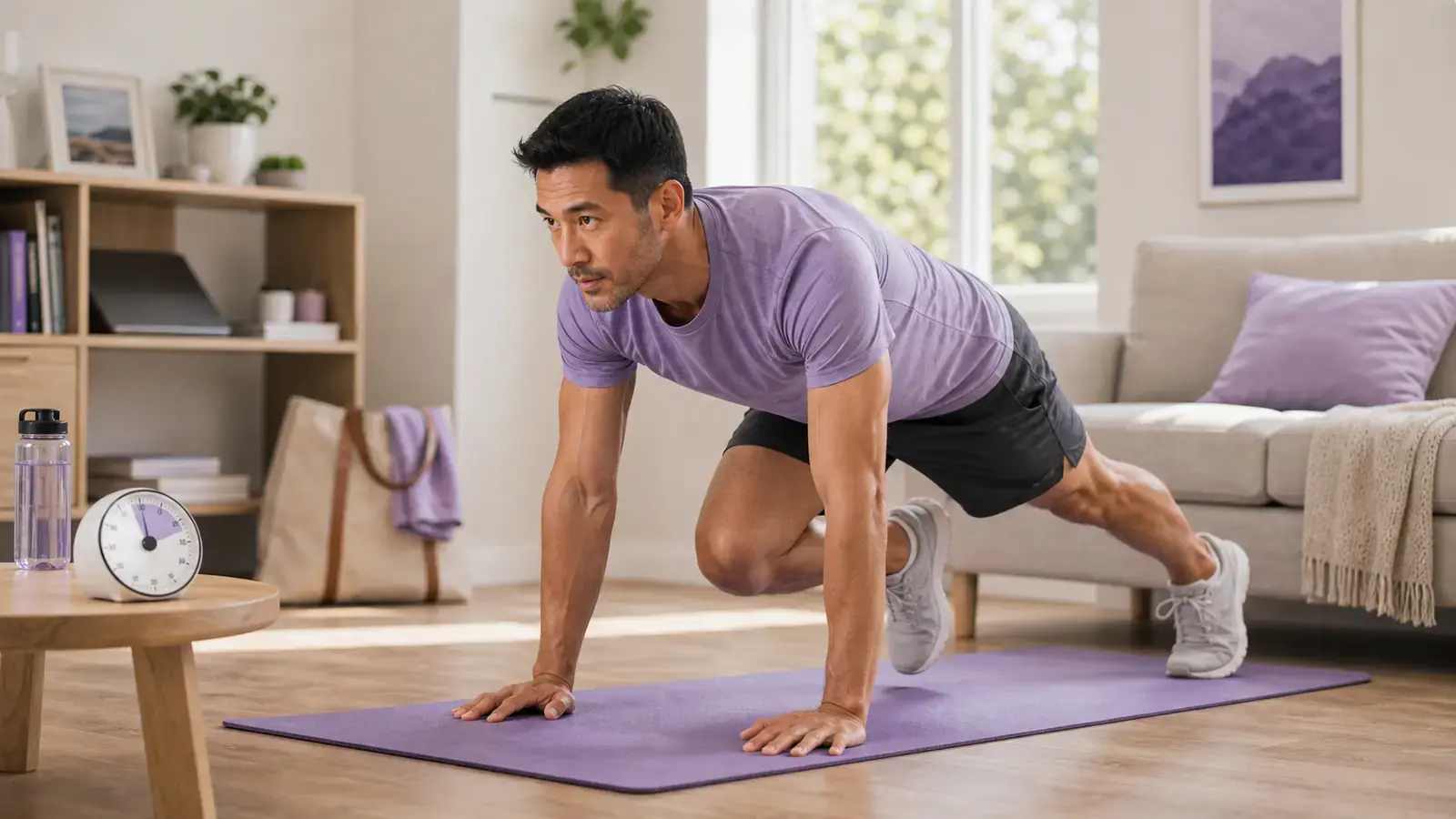
The 3 Most Functional Exercises You Can Do in Just 10 Minutes
Written by: Sean Hiller, PT, DPT, CSCS, BFR-L2, USAW-L1
If you only had 10 minutes to work out, what exercises would give you the biggest return on your investment?
There are thousands of exercises to choose from, but when it comes to improving strength, mobility, coordination, and real-world function, three movement patterns stand above the rest:
- The squat
- The deadlift
- The overhead press
In a recent workout, I challenged myself to complete as many rounds as possible, or AMRAP, in 10 minutes using only bodyweight versions of these three fundamental movements.
The workout was simple:
10-Minute Functional Fitness AMRAP
- 30 Bodyweight Deadlifts
- 30 Bodyweight Squats
- 30 Bodyweight Overhead Presses
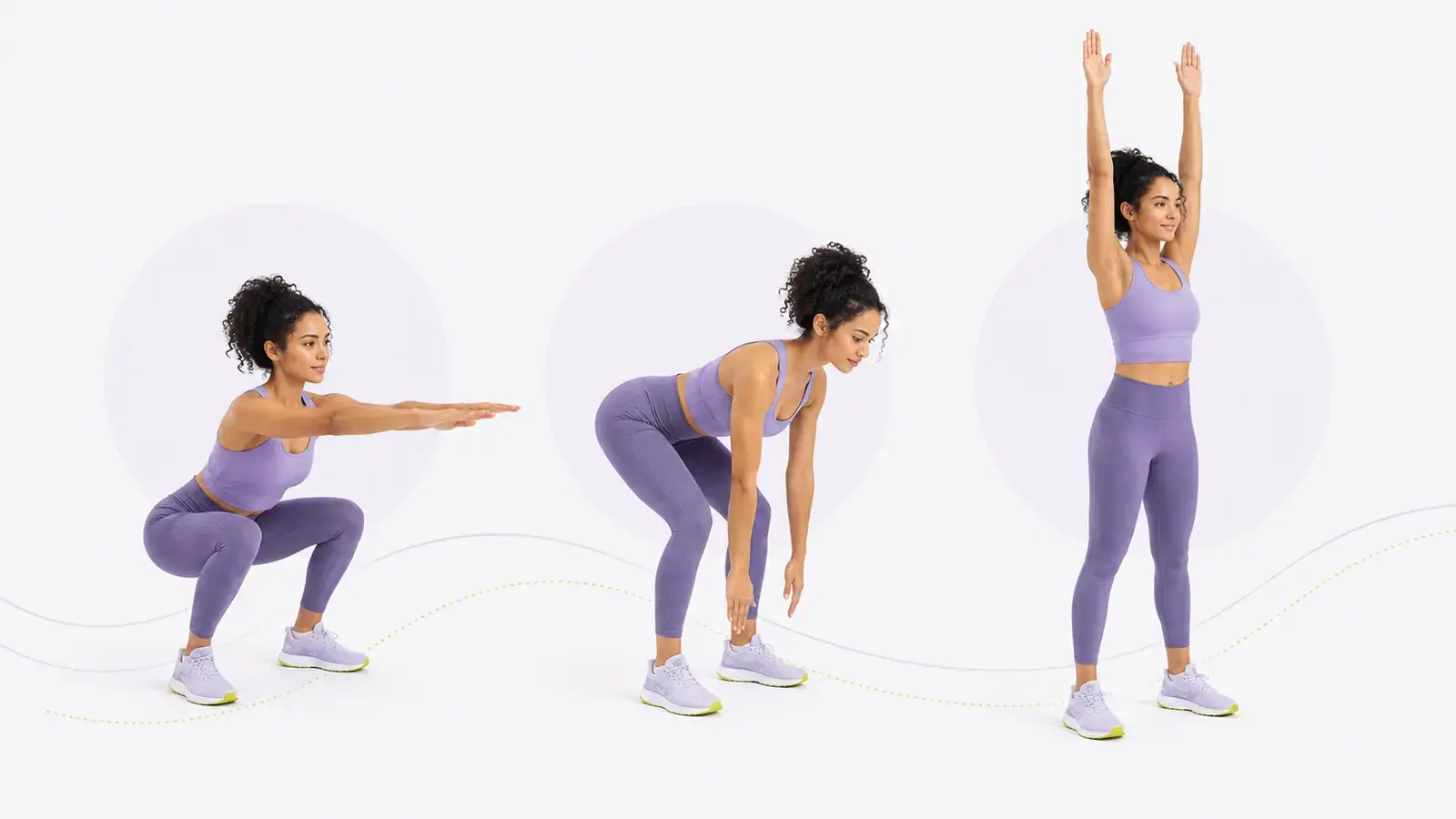
Repeat for 10 minutes
Simple. Effective. Functional.
That simplicity is part of the point.
Many people assume a good workout has to be complicated. They think they need a long list of exercises, fancy equipment, or a full hour blocked off on the calendar before anything “counts.”
That is usually not true.
If you choose the right movement patterns, even a short session can challenge the body in a very meaningful way.
Why These Three Movements?
The human body was designed to bend, lift, stand, carry, and reach.
These three movement patterns train nearly every major muscle group while reinforcing the way we naturally move throughout daily life.
That is what makes them so valuable.
They are not just gym exercises. They are movement patterns that show up in everyday life over and over again.
When you train them well, you are not just improving your workout performance. You are improving how you move through the world.
1. The Deadlift: The Foundation of Everyday Strength
Whether you are picking up a child, carrying groceries, loading luggage into a car, or moving furniture, you are performing a deadlift pattern.
The deadlift teaches proper hip hinging, develops posterior chain strength, and helps reduce the risk of injury during everyday activities.
Benefits include:
- Stronger glutes and hamstrings
- Improved low back resilience
- Better athletic performance
- Increased power production
A bodyweight deadlift may seem simple, but performing high repetitions correctly challenges muscular endurance and movement quality.
That matters because most people do not get injured in daily life from doing something advanced. They get hurt doing ordinary tasks with poor mechanics, fatigue, or limited strength.
The deadlift pattern helps prepare the body for exactly those kinds of tasks.
It teaches you how to load the hips, keep the trunk organized, and use the large muscles of the posterior chain instead of relying only on the low back.
For long-term function, that is a big deal.
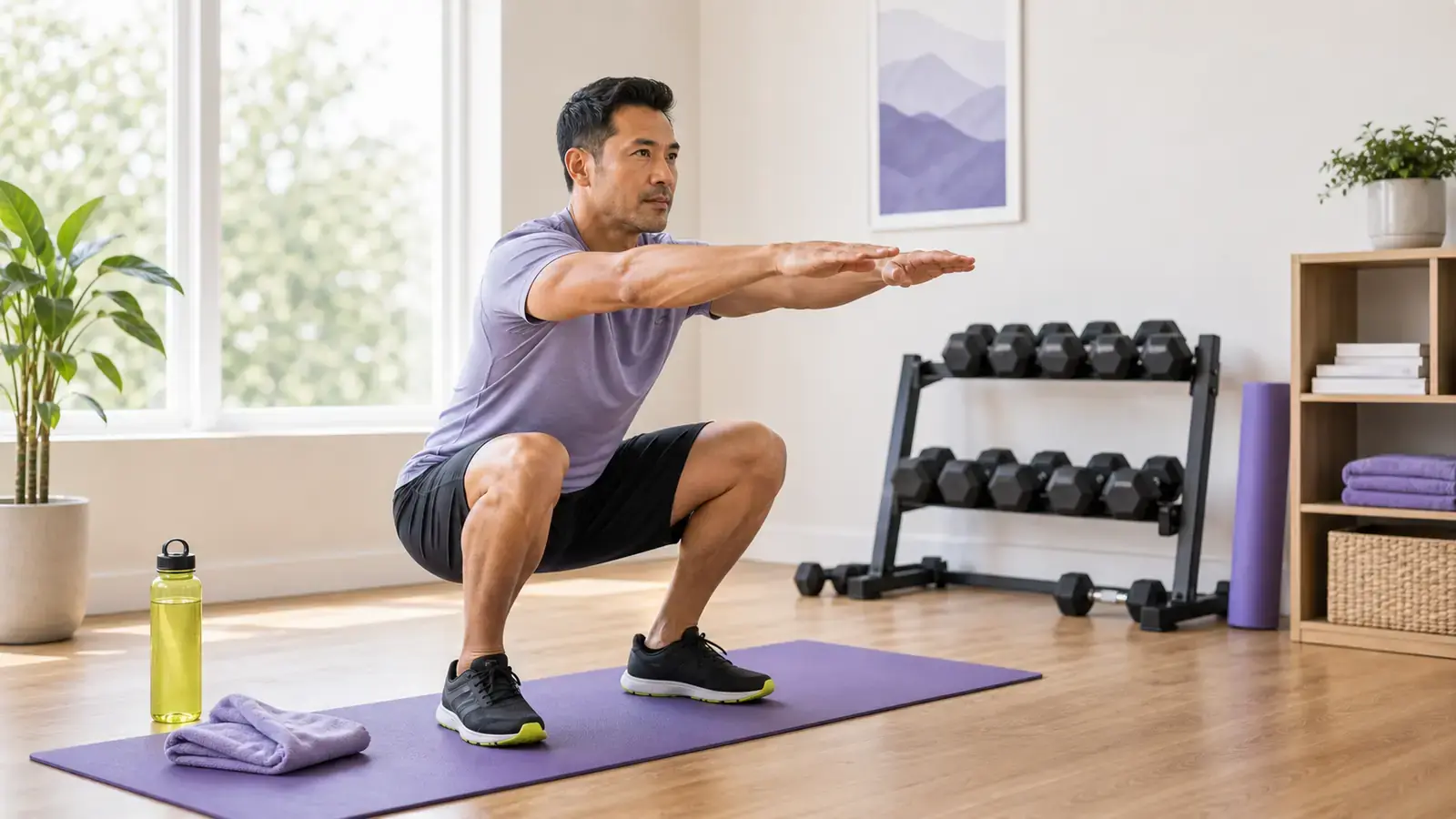
2. The Squat: The Ultimate Human Movement
Humans have been squatting since the beginning of time.
Sitting down, standing up, getting off the floor, climbing stairs, and countless athletic movements all rely on the squat pattern.
Benefits include:
- Improved lower body strength
- Better mobility through the hips, knees, and ankles
- Enhanced balance and coordination
- Increased functional independence as we age
If you want to move well for life, you need to be able to squat well.
The squat is one of the clearest examples of a movement that matters inside and outside the gym.
It teaches the body how to produce force through the legs, control posture through the trunk, and move efficiently through a full-body pattern that shows up in daily life constantly.
For older adults especially, keeping the ability to sit down and stand up confidently is a major quality-of-life issue. But even for younger adults, the squat matters because it supports sports, training, household tasks, and long-term mobility.
It is hard to think of many movements that give you more back for the time you put into them.
3. The Overhead Press: Strength Above Your Head
Most people do not think about overhead strength until they need it.
Putting luggage into an overhead compartment, placing a box on a shelf, or lifting a child overhead all require pressing strength.
The overhead press develops:
- Shoulder stability
- Upper body strength
- Core engagement
- Coordination between the upper and lower body
By training the body to safely generate force overhead, we build resilience for both athletics and everyday life.
Even when the overhead press is done as a bodyweight or unloaded pattern, it still teaches something important:
- shoulder control
- reaching mechanics
- ribcage and trunk position
- coordination through the full chain
That makes it more than just an upper-body exercise.
The overhead press pattern asks your body to organize itself while moving force above your head, which is something many adults actually lose over time if they never train it.
Why These Three Work So Well Together
Part of what makes this trio so effective is that it covers a lot of ground without creating unnecessary complexity.
Together, these movements train:
- bending and hinging
- squatting and standing
- reaching and pressing
- lower-body strength
- upper-body control
- trunk stability
- coordination under fatigue
That is a lot of value in a very small package.
If you only have 10 minutes, you do not need more variety. You need more return on investment.
These three movements provide that.
Why an AMRAP?
AMRAP stands for As Many Rounds As Possible.
This style of training combines strength, muscular endurance, and cardiovascular fitness into one efficient workout.
Instead of focusing solely on weight lifted, an AMRAP challenges your ability to maintain movement quality under fatigue.
In just 10 minutes, you can:
- Elevate your heart rate
- Build muscular endurance
- Improve movement efficiency
- Burn calories
- Develop work capacity
For busy adults, that is a tremendous return on investment.
AMRAPs are especially useful because they reward consistency and pacing, not just intensity. If you go too fast too early, the workout lets you know. If you move with good rhythm and solid technique, you can accumulate a surprising amount of quality work in a short time.
That makes them practical for real life.
Functional Fitness Does Not Have to Be Complicated
Many people believe they need elaborate workout programs, expensive equipment, or hours in the gym to get results.
The truth is that consistently performing fundamental movement patterns often produces better long-term outcomes than constantly chasing the latest fitness trend.
Squat. Hinge. Press.
Master those three patterns and you will build strength that carries over into sports, work, family life, and everyday activities.
This is one of the biggest reasons functional fitness matters so much.
It is not about looking athletic for one hour in a gym. It is about building a body that performs better outside the gym too.
When exercise improves how you move in normal life, that is where it becomes especially valuable.
What Makes a Movement “Functional”?
This word gets thrown around a lot, so it is worth clarifying.
A movement is functional when it helps prepare you for real-life demands.
That includes things like:
- getting up and down from the floor
- carrying heavy objects
- bending to pick things up safely
- reaching overhead with control
- maintaining balance and coordination while moving
The squat, deadlift, and overhead press all do that well because they reflect the kinds of positions and force demands people actually encounter.
That does not mean every exercise has to look like a household task. It means the movement should build qualities that transfer into life outside the gym.
These three do exactly that.
A 10-Minute Workout Can Still Be Enough
There is a tendency to underestimate short workouts.
People assume 10 minutes is too short to matter, especially if they are used to thinking in terms of hour-long gym sessions.
But a short workout built around good movement patterns can still be very effective.
Current physical activity guidance emphasizes that adults should move regularly and include muscle-strengthening work as part of their weekly routine.[1][2] That does not mean every session has to be long. It means consistency matters.
And consistency becomes much easier when workouts are simple enough to repeat.
Ten minutes does not have to be perfect.
It just has to be purposeful.
What This Looks Like in Real Life
The next time you are short on time, set a timer for 10 minutes and see how many rounds you can complete.
You may be surprised by how challenging and effective simple can be.
That is one of the best lessons in fitness:
effective does not always mean complicated.
When you are busy, tired, traveling, training at home, or trying to rebuild momentum, a simple workout like this can keep you moving without making the barrier to entry too high.
That matters more than people think.
Because the workouts that help most over time are usually the ones you can actually do, not just the ones that look impressive on paper.
Challenge
Try this workout for yourself:
10-Minute AMRAP
- 30 Bodyweight Deadlifts
- 30 Bodyweight Squats
- 30 Bodyweight Overhead Presses
Track your rounds and let us know how you did.
Remember: fitness does not have to be complicated. Sometimes the most functional workouts are built around the most fundamental movements.
FAQ
What are the most functional exercises you can do in a short workout?
Squats, deadlifts, and overhead presses are some of the most functional movement patterns because they train strength, coordination, and real-world movement at the same time.
Can a 10-minute workout actually be effective?
Yes. A short workout can still be effective when it is built around high-value movement patterns and performed with purpose and consistency.
Why use an AMRAP format?
AMRAP training lets you combine strength, muscular endurance, and cardiovascular challenge in one efficient workout while keeping the structure simple.
Do I need equipment for this workout?
No. This version uses bodyweight only, which makes it easy to do at home or when you are short on time.
Why are these movements considered functional?
Because they reflect real-life patterns like bending, standing, lifting, and reaching overhead. Training them can improve how you move in everyday life, not just in workouts.
Next Steps
Looking for support on your wellness journey? Click here to see if GobyMeds could support your on your wellness journey!
Footnotes
[1] Centers for Disease Control and Prevention. “Adding Physical Activity as an Adult.” https://www.cdc.gov/physical-activity-basics/adding-adults/index.html
[2] U.S. Department of Health and Human Services. “Physical Activity Guidelines for Americans, 2nd edition.” https://health.gov/sites/default/files/2019-09/Physical_Activity_Guidelines_2nd_edition.pdf





.svg)