The Truth About "Happy Hour": Can You Drink on GLP-1s?
If you are starting your journey with GLP-1 medications like semaglutide or the dual-action tirzepatide, you probably have a list of questions. "What should I eat?" "How much water do I need?" and, inevitably, "Can I still have a drink?"
It is one of the most common questions we hear at GobyMeds. The short answer is: Yes, usually - but it’s complicated.
While there is no chemical reaction that makes alcohol strictly "forbidden" while on these medications, the way your body processes that glass of wine or beer is going to feel very different. Here is the science-backed reality of mixing alcohol with GLP-1s, and how to stay safe if you choose to indulge.
The "Buzz" Might Be Gone (And That’s a Good Thing!)
One of the most surprising side effects patients report is that they simply don’t want to drink as much as they used to.
Why does this happen? It comes down to how these medications work in your brain. GLP-1 medications are designed to reduce "food noise" - that constant mental preoccupation with what you are going to eat next. They do this by targeting the appetite and reward centers in your brain.
Recent research published in journals like JAMA Psychiatry and Scientific Reports suggests that this "quieting" effect extends beyond food. Just as the medication helps curb cravings for sugar, it may dampen the dopamine "reward" you get from alcohol. You might pour a glass of wine out of habit, take two sips, and realize you are completely satisfied.
The Gut Factor: Why You Need to Be Careful
Beyond the brain, GLP-1s and GLP-1/GIPs (like tirzepatide) physically change how your digestion works. They delay "gastric emptying," which means they slow down how quickly food and liquid leave your stomach.
This has two major impacts on drinking:
- Delayed Effects: Because your stomach is emptying slower, alcohol might not hit your bloodstream as quickly as you are used to. You might feel fine for a while, only to have the effects hit you all at once later.
- Worsened Side Effects: These medications can already cause nausea or stomach upset, especially when you are first adjusting to them. Alcohol is a stomach irritant. Combining a slow-moving stomach with an irritant like alcohol is a recipe for heartburn, acid reflux, and increased nausea.
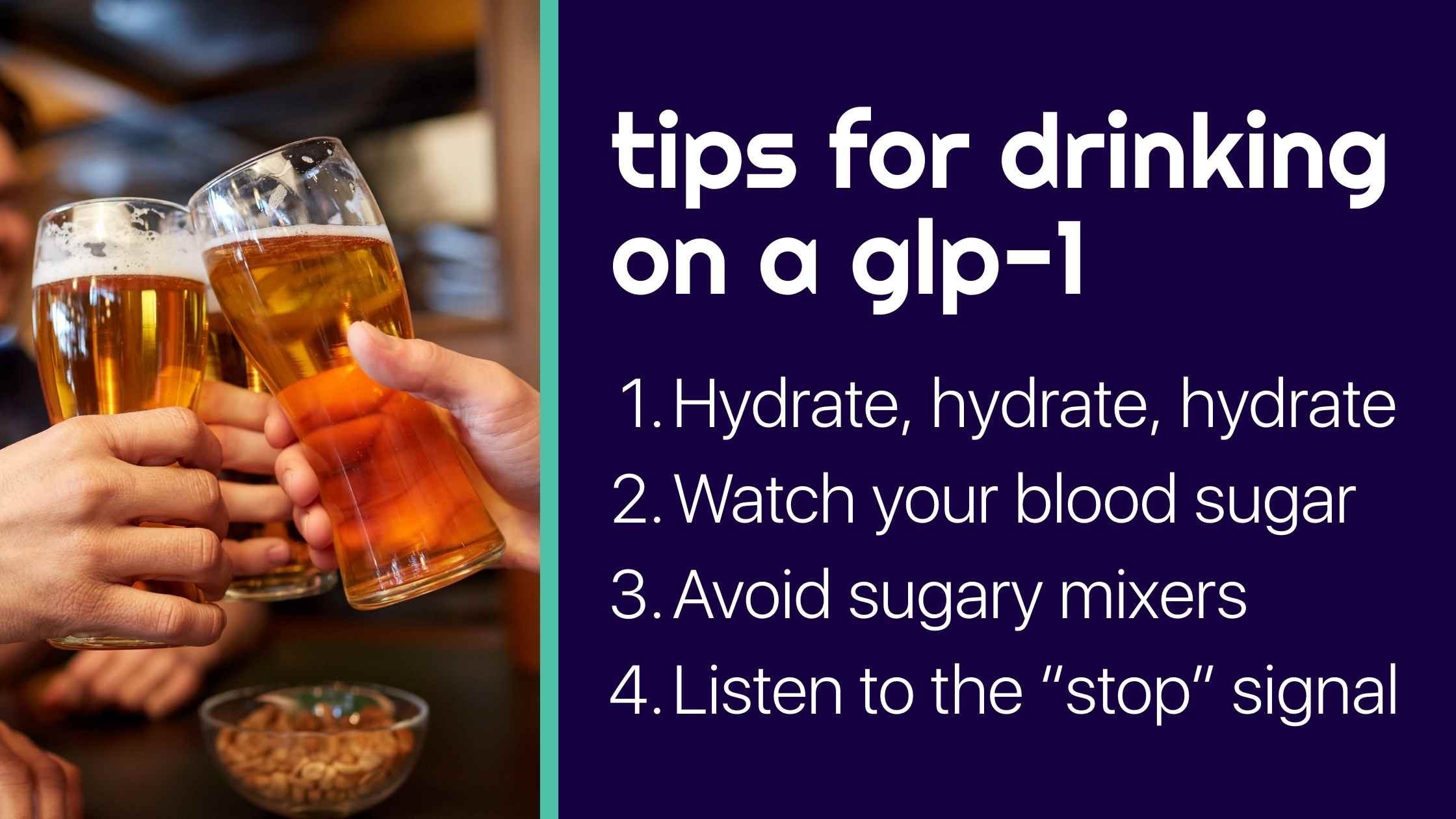
4 Tips for Sipping Safely
If you choose to drink, we want you to do it safely. Here are four tips to keep in mind:
1. Hydrate, Hydrate, Hydrate
Dehydration is already a potential side effect of GLP-1 therapy, especially if you are experiencing any nausea. Alcohol is a diuretic, meaning it dehydrates you further.
The Strategy: Follow the "one-for-one" rule. For every alcoholic drink you have, drink a full glass of water.
2. Watch Your Blood Sugar
GLP-1 medications help lower blood sugar. Alcohol can also cause your blood sugar to drop (hypoglycemia), sometimes hours after you stop drinking.
The Strategy: Avoid drinking on an empty stomach. Having a small meal with protein and healthy fats can help stabilize your levels.
3. Avoid Sugary Mixers
While the medication helps regulate blood sugar, sugary cocktails (like margaritas or daiquiris) can cause a spike followed by a crash. Plus, they are full of "empty calories" that provide no nutritional value when your appetite is already limited.
The Strategy: Opt for lower-sugar options like dry wine, light beer, or spirits mixed with soda water and fresh lime."
4. Listen to the "Stop" Signal
This is the most important tip. Your body’s satiety signals - that feeling of being "full" - will be much stronger on these medications.
The Strategy: If you are halfway through a drink and feel done, stop. Don't force it. Trust that your body knows what it can handle.
A Note on Pancreatitis
While rare, both heavy alcohol use and GLP-1 medications have been linked to pancreatitis. If you have a history of pancreatitis or heavy alcohol use, it is critical that you discuss this with your provider before starting treatment, as this medication may not be right for you.
The Bottom Line
Your weight loss journey is about building a healthier, more vibrant life. You don't have to give up everything you enjoy, but you may find that your relationship with those things changes naturally.
If you are concerned about your alcohol use or how it interacts with your medication, the GobyMeds Customer Support Team is here for you. We believe in a transparent, patient-first approach to help you navigate these lifestyle changes with confidence.



.svg)