Cardio vs. Weights: If You Only Have 20 Minutes, Which Is Better?
Written by: Sean Hiller, PT, DPT, CSCS, BFR-L2, USAW-L1
One of the most common questions in fitness is:
If I only have 20 minutes to exercise, should I do cardio or lift weights?
Many people assume there has to be a winner. Some swear by running, biking, or rowing. Others believe strength training is the only thing that matters. But what if the answer is not cardio or weights? What if the answer is both?
The Problem With the “Either-Or” Mindset
The human body does not separate fitness into neat categories. Your heart does not know whether you are lifting weights or running. Your muscles do not stop working because your heart rate is elevated. In reality, the body performs best when strength and cardiovascular fitness work together.
That is why, if I only had 20 minutes to train, I would not choose traditional cardio or traditional weightlifting. I would choose resistance cardio.
What Is Resistance Cardio?
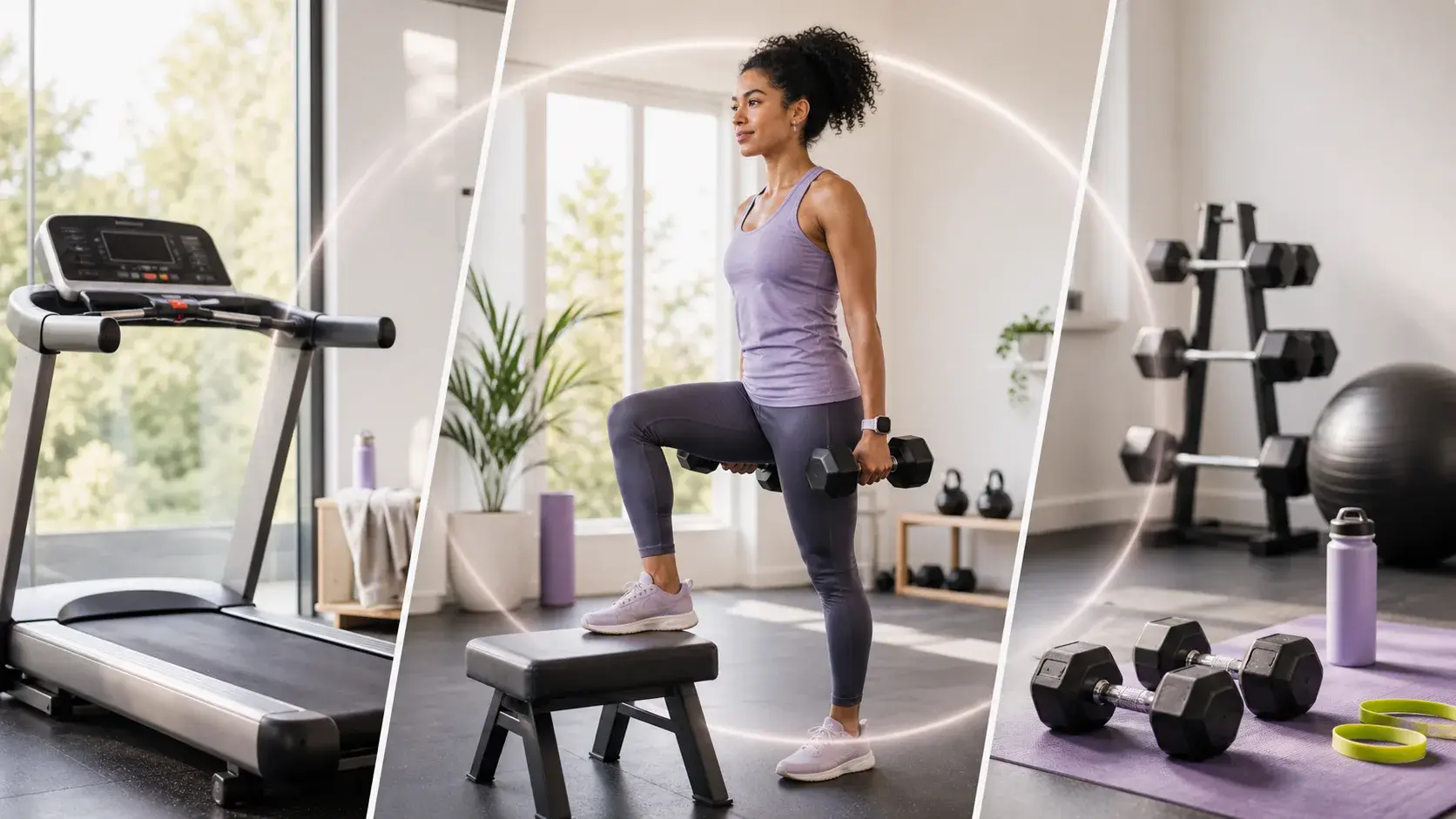
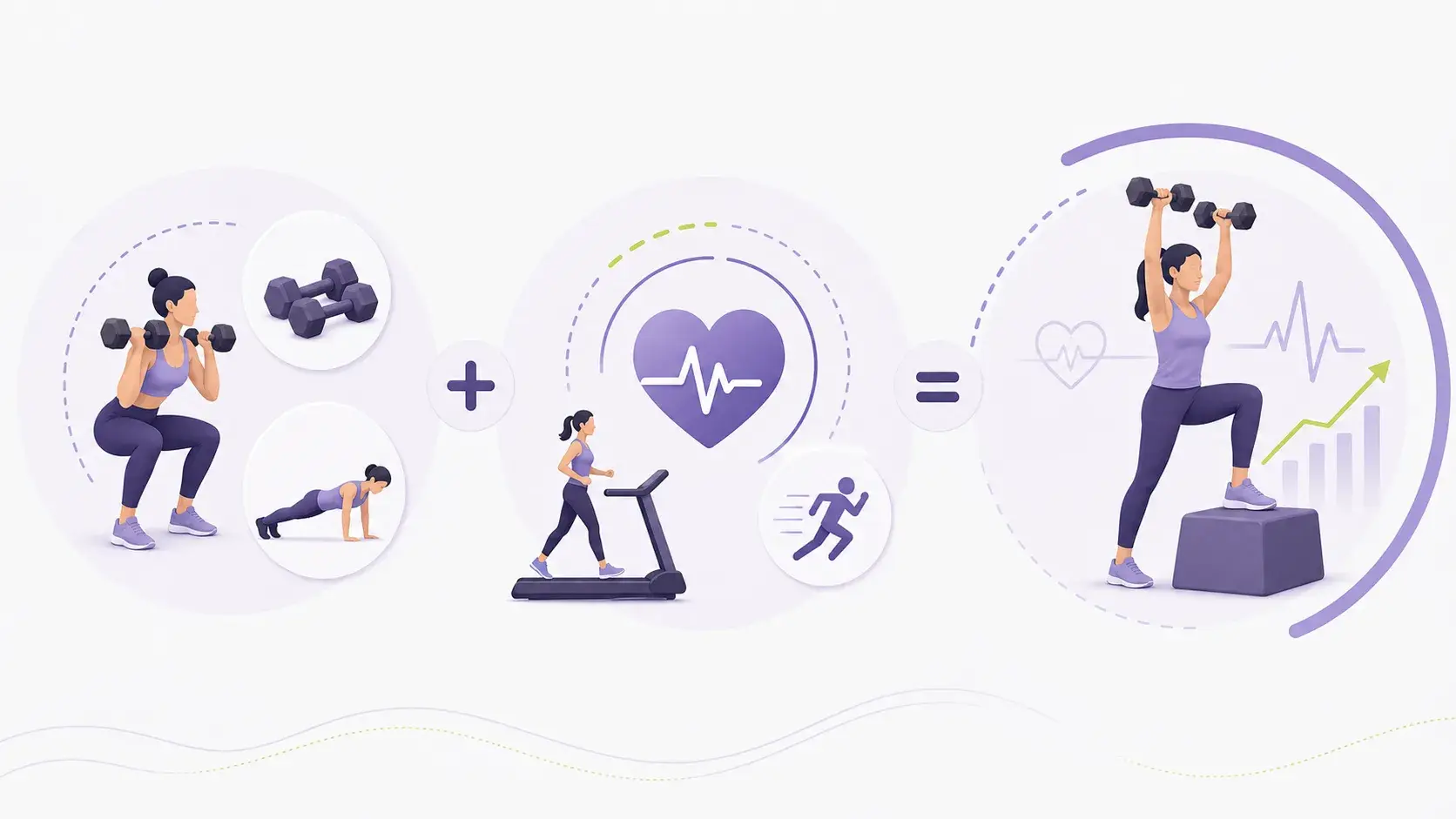
Resistance cardio combines full-body strength movements with minimal rest, creating a workout that simultaneously challenges your muscles and cardiovascular system.
Instead of spending 20 minutes jogging at a steady pace or resting several minutes between heavy sets in the gym, you are constantly moving while performing resistance-based exercises.
Think:
- Squats
- Push-ups
- Lunges
- Burpees
- Mountain climbers
- Bodyweight deadlifts
- Overhead presses
- Step-ups
These movements require muscular effort while keeping your heart rate elevated throughout the workout.
The result?
You build strength, improve endurance, and burn calories at the same time.
Why Resistance Cardio Works
1. You build strength
One criticism of traditional cardio is that it does little to maintain or increase muscle mass. Resistance-based movements challenge your muscles through repeated contractions, helping preserve and improve strength over time. Even bodyweight exercises can provide a meaningful training stimulus when performed with proper intensity and enough total volume. That matters because strength supports much more than appearance. It supports posture, movement quality, resilience, and long-term function.
When time is short, it makes sense to choose a style of training that still asks your muscles to do real work.
2. You improve cardiovascular fitness
When you move continuously with minimal rest, your heart and lungs are forced to work harder to deliver oxygen throughout the body. Your cardiovascular system does not care whether you are running on a treadmill or performing a circuit of squats and push-ups. If your heart rate is elevated and sustained, you are training your aerobic system.
This is one of the biggest reasons resistance cardio is so useful. You are not forced to choose between “today is my cardio day” and “today is my strength day” when time is limited. You can challenge both systems in the same session.
3. You maximize limited time
Most people are not professional athletes. They have jobs, families, responsibilities, and busy schedules.
For someone with only 20 minutes available, combining strength and cardiovascular training often provides more overall benefit than dedicating the entire session to one or the other.
You get more done in less time. And that matters.
Because in the real world, the best program is not always the most scientifically perfect one on paper. It is the one that fits into your life well enough that you can actually keep doing it.
Why This Is Often Better Than Choosing Sides
The cardio-versus-weights debate gets framed like one has to beat the other. But if your goal is better health, better fitness, and better long-term consistency, that framing usually misses the point.
Current physical activity guidance recommends both aerobic activity and muscle-strengthening activity as part of a healthy routine.[1][2] That is because they do different things well:
- aerobic work supports heart and lung health
- resistance work supports strength, function, and physical independence
If you only have 20 minutes, it often makes more sense to train in a way that lets both qualities show up.
The Best Exercise Is the One That Checks Multiple Boxes
When evaluating exercises, I often ask: How many qualities can this movement improve at once?
A full-body resistance cardio workout can improve:
- Strength
- Muscular endurance
- Cardiovascular fitness
- Coordination
- Balance
- Mobility
- Calorie expenditure
That is an incredible return on investment for a 20-minute workout.
This is one reason compound movements tend to matter so much when time is limited. A squat, push-up, lunge, carry, or step-up asks a lot more of the body than a single isolated movement done slowly with long rest breaks. When you string those movements together with purpose, the effect becomes even more efficient.

What a 20-Minute Resistance Cardio Workout Might Look Like
You do not need fancy equipment or a gym membership.
Here is a simple example:
20-Minute AMRAP*
- 15 Squats
- 10 Push-Ups
- 15 Reverse Lunges
- 10 Bodyweight Deadlifts
- 20 Mountain Climbers
Repeat as many rounds as possible in 20 minutes while maintaining good movement quality.
Your muscles will be working. Your heart rate will be elevated. And you will be training multiple fitness qualities simultaneously.
That last part matters. The goal is not to race through sloppy reps just to feel tired. The goal is to keep moving while still owning the movement. Quality still matters, even when intensity goes up.
What Makes This Different From Random High-Intensity Exercise
Resistance cardio does not mean chaos. It is not just flailing through a hard workout and hoping exhaustion equals progress.
The best resistance cardio workouts still follow the same rules that good strength training follows:
- choose movements you can control
- keep technique clean
- use intensity that matches your current fitness level
- scale when needed
That means one person’s resistance cardio workout might use bodyweight only, while someone else might use dumbbells, kettlebells, or step-ups onto a box. The format can change. The principle stays the same: keep the body working against resistance while keeping the cardiovascular system engaged.
Who This Works Best For
This approach can work especially well for:
- busy adults with limited training time
- people who want both strength and cardio benefits
- those training at home with little equipment
- people who get bored doing steady-state cardio alone
- anyone trying to make short workouts count
It is also useful for people who struggle with the mental trap of thinking a workout only “counts” if it fits neatly into one category. It can count as both.
A Few Important Limits
This does not mean resistance cardio replaces everything.
There is still a place for:
- traditional steady-state cardio
- heavy strength work with longer rest periods
- skill-specific athletic training
- mobility-focused sessions
If your specific goal is maximizing a heavy deadlift, preparing for a half marathon, or building advanced strength in a very targeted way, then more specialized training makes sense.
But that is not the question most people are asking when they say:
I only have 20 minutes.
In that situation, efficiency matters more. And resistance cardio is one of the best ways to create that efficiency.
The Real Goal Is Long-Term Health
The cardio versus weights debate often misses the bigger picture. Research consistently shows that both muscular strength and cardiovascular fitness are associated with better health outcomes, improved quality of life, and increased longevity.[1][2][3] That is why the best approach is not choosing one and ignoring the other. It is finding efficient ways to develop both.
When you only have a small window to work with, the smartest move is often the one that gives you the broadest return.
The Bottom Line
If you only have 20 minutes to exercise, do not get stuck debating cardio versus weights. Do both. Choose full-body movements that challenge your muscles while keeping your heart rate elevated. You will build strength, improve cardiovascular fitness, burn calories, and make the most of your limited training time.
When time is short, resistance cardio may be one of the most effective tools available. Because sometimes the best answer is not choosing sides. It is getting the benefits of both.
FAQ
If I only have 20 minutes, is cardio or weights better?
If time is very limited, a combined approach is often more useful than choosing just one. Resistance cardio lets you challenge both strength and cardiovascular fitness in the same workout.
What is resistance cardio?
Resistance cardio is a style of training that combines resistance-based movements like squats, push-ups, lunges, and presses with minimal rest so your muscles and cardiovascular system work at the same time.
Does resistance cardio build strength?
It can. Especially for general fitness, bodyweight and resistance-based circuits can provide a meaningful strength stimulus when movement quality, effort, and total volume are appropriate.
Does resistance cardio count as cardio?
Yes. If your heart rate is elevated and sustained while you move through the workout, you are challenging your cardiovascular system too.
Is this better than traditional cardio or heavy lifting?
Not always. It depends on your goal. But for someone with only 20 minutes who wants broad fitness benefits, resistance cardio is often one of the most efficient options.
Footnotes
[1] Centers for Disease Control and Prevention. “Adding Physical Activity as an Adult.” https://www.cdc.gov/physical-activity-basics/adding-adults/index.html
[2] U.S. Department of Health and Human Services. “Physical Activity Guidelines for Americans, 2nd edition.” https://health.gov/sites/default/files/2019-09/Physical_Activity_Guidelines_2nd_edition.pdf
[3] American College of Sports Medicine. “Resistance Training for Health and Fitness.” https://acsm.org/




.svg)