Free Weights vs. Machines: Why Stability and Control Matter More Than You Think
Written by: Sean Hiller, PT
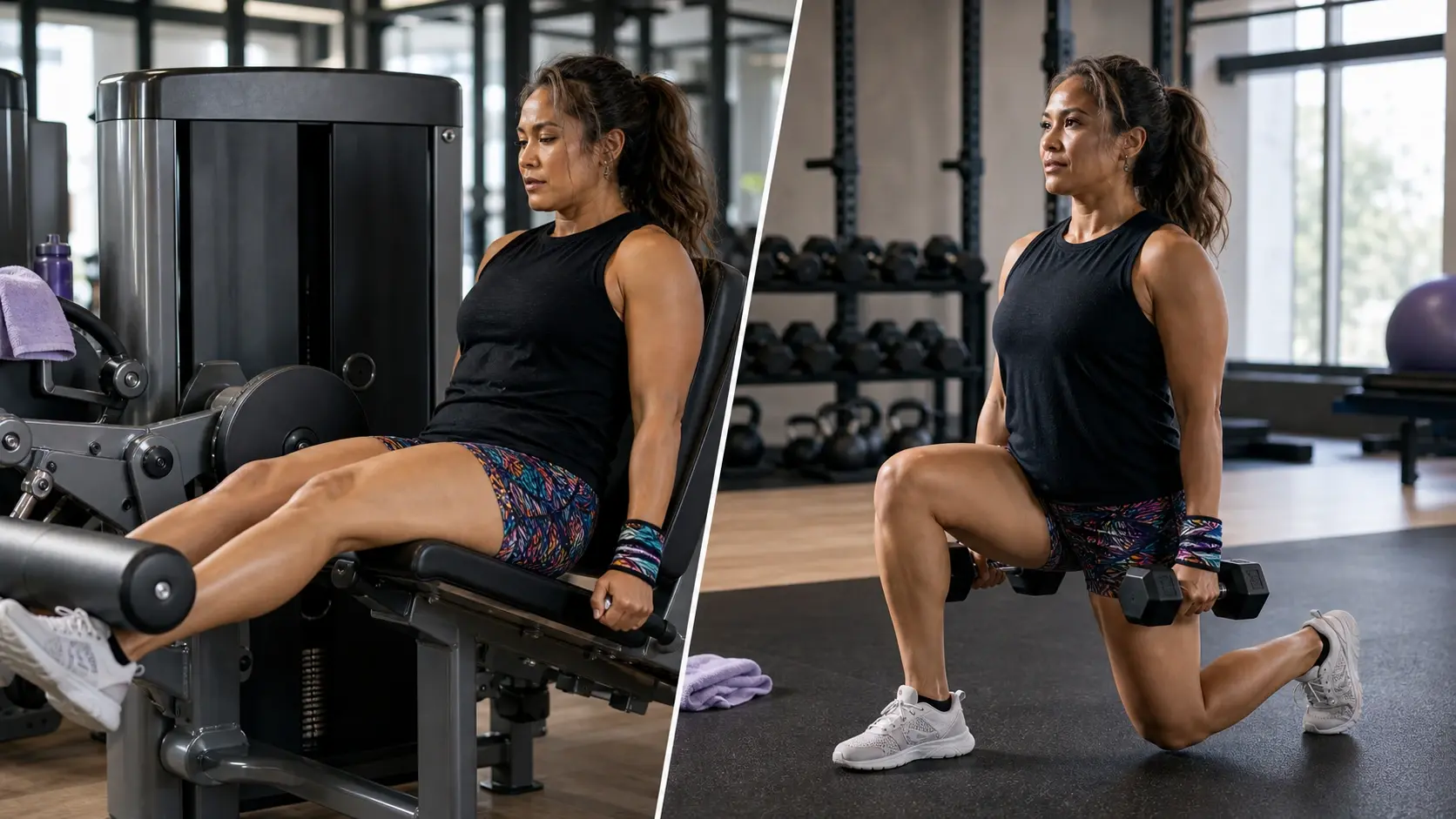
Walk into any gym and you will usually see two clear options: rows of machines and an open area filled with dumbbells, barbells, kettlebells, and benches. Machines have their place. They are convenient, easy to use, and can absolutely be helpful in certain situations.
But if your goal is to build real strength, improve movement quality, and develop a body that performs well outside the gym, free weights should be the foundation of your training. That does not mean machines are bad. It just means they solve a different problem.
If you are trying to build strength that actually carries over into daily life, one of the biggest things to understand is that strength is not just about producing force. It is also about creating stability, maintaining position, and controlling your body through space. That is where free weights stand out.
The Biggest Difference: Who Creates Stability?
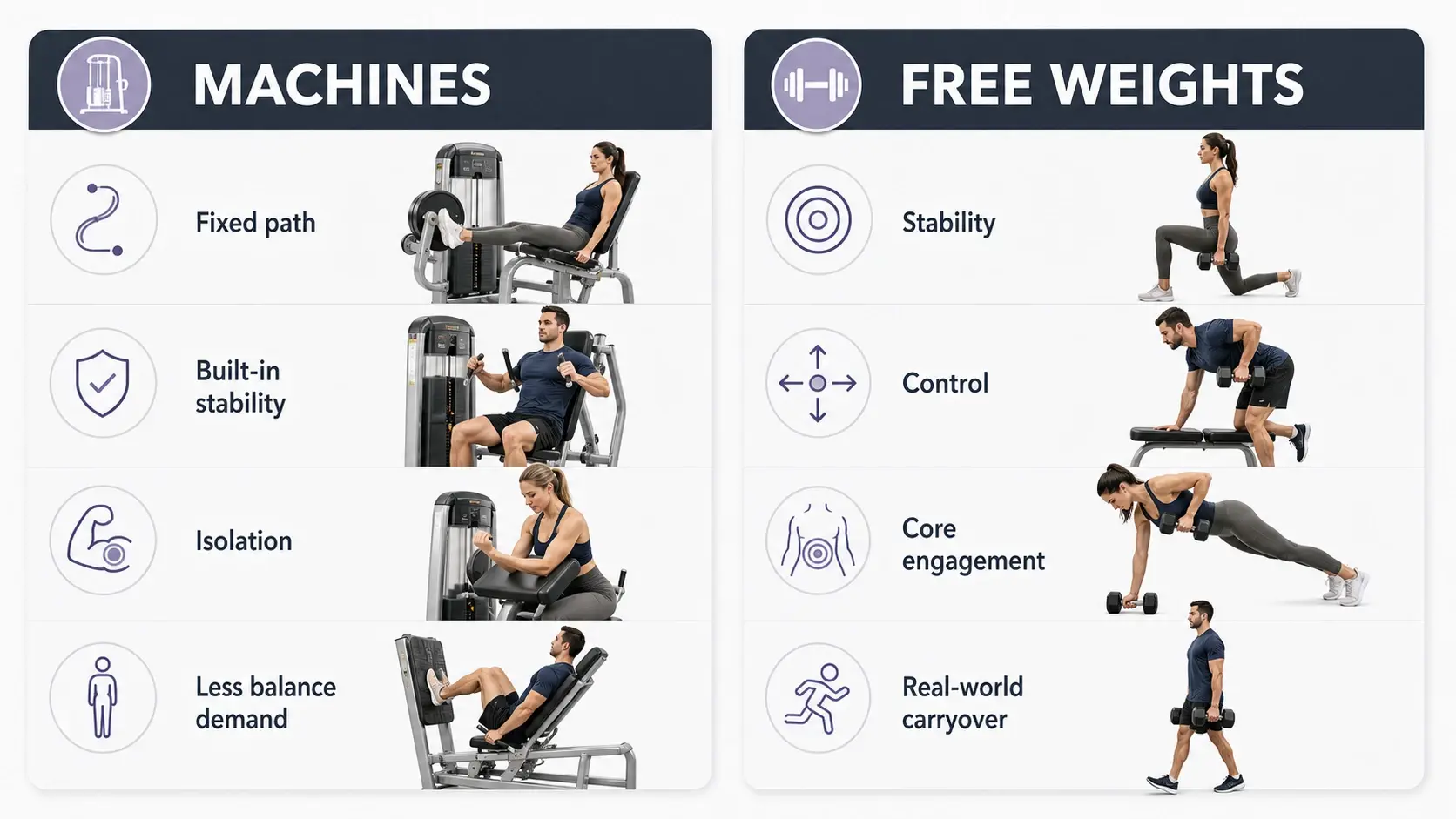
Machines do a lot of the work for you. They guide the path of movement, lock you into a fixed position, and provide built-in stability. That can make exercises feel easier and more controlled, but it also means your body is not doing as much of the organizing.
Free weights are the opposite. With dumbbells and barbells, you are responsible for creating stability. There is no track, no fixed path, and no machine holding you in position while you move the load. It is just you controlling the weight through space.
That changes everything. Instead of simply pushing or pulling against a machine, your body has to manage posture, joint position, balance, timing, and coordination all at once. That creates a different training effect, one that tends to transfer much better to real movement.
Stability Drives Strength
A lot of people think of strength as nothing more than how much weight you can move.
But strength without stability is limited.
When you use free weights, your body has to coordinate multiple muscle groups at once to keep the movement balanced and controlled. You are not just training the big “main” muscles. You are also training:
- Stabilizers around your joints
- Your core to maintain position
- Smaller supporting muscles that machines often bypass
- Your nervous system’s ability to organize the movement as a whole
This leads to more complete strength development. Instead of building strength in isolation, you are building strength your body can actually use.
That matters because in real life, force production is only one part of the equation. You also need to be able to resist unwanted movement, stay organized under load, and maintain control when things are not perfectly set up for you.
Free weights ask for that.
Control Improves Movement Quality
Free weights demand control. If your form is off, the weight usually tells you immediately. You cannot rely on a machine to keep you in the right groove. You have to own every inch of the movement.
That forces you to:
- Move with intention
- Maintain better alignment
- Control the weight from start to finish
- Stay aware of where your body is in space
Over time, that improves body awareness and movement quality. You get better at noticing when you are shifting to one side, losing posture, compensating through your low back, or letting one joint do more work than it should. That kind of awareness matters not just for performance, but for long-term progress.
Machines can sometimes hide those issues because the equipment makes the movement look cleaner than it really is.
Free weights expose what is actually happening. That is a good thing.
Real-World Carryover
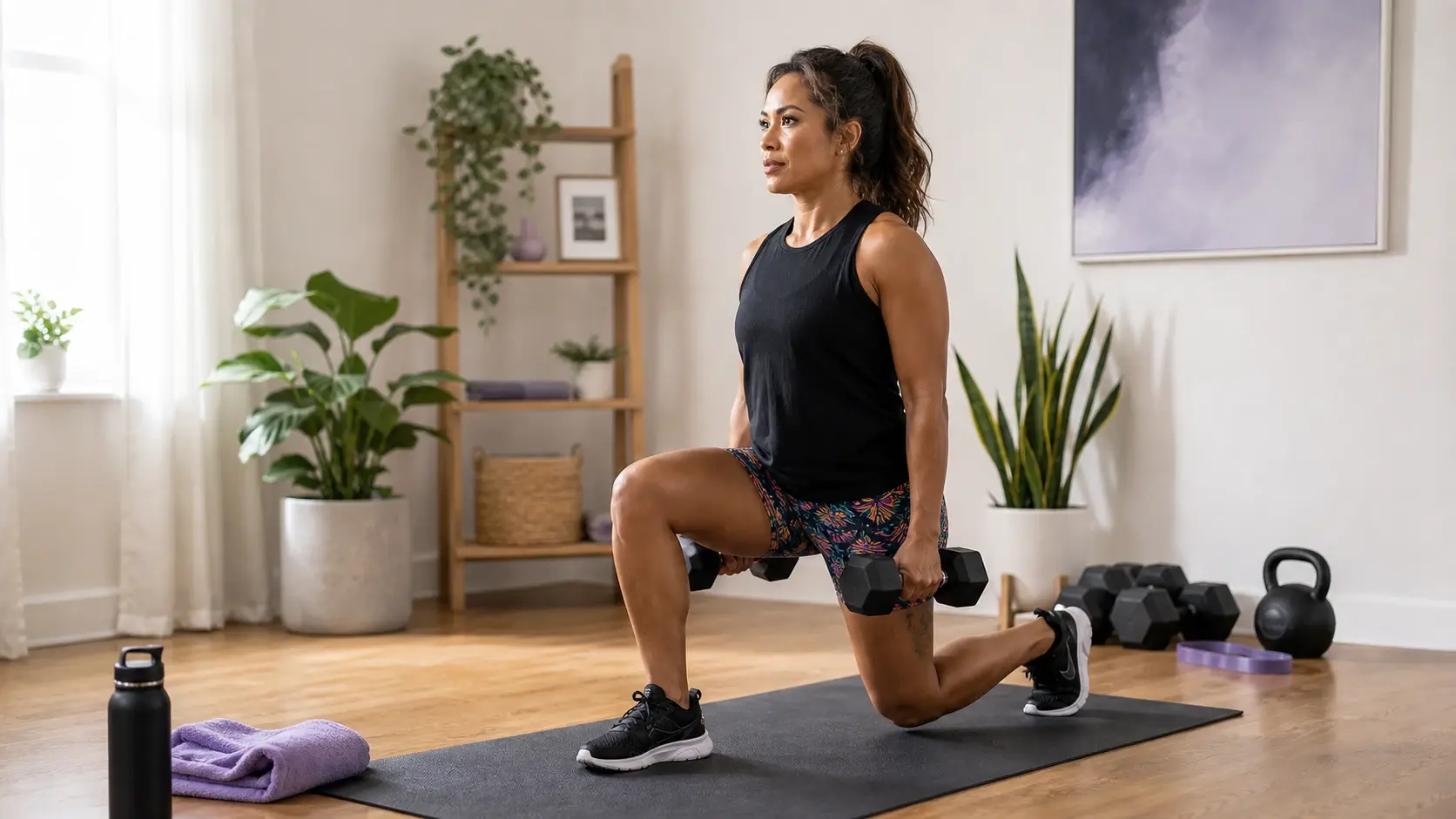
In real life, you do not move along fixed tracks. You lift, carry, reach, hinge, squat, rotate, and stabilize in environments that are not perfectly guided. You pick up groceries, lift luggage, carry kids, move boxes, get up off the floor, and catch yourself when you lose balance.
Free weight training reflects those demands much more closely. Whether it is a goblet squat, a dumbbell press, a Romanian deadlift, a split squat, or a farmer carry, you are training your body to organize itself in ways that look more like actual movement.
That is one of the biggest reasons free weights tend to build more usable strength. Machines can absolutely build muscle. They can absolutely make an exercise feel hard. But hard is not always the same thing as transferable.
Free weights usually ask more of the body, and because of that, they often give you more back.
More Engagement, Less Compensation
Because machines guide your movement, it is easier to compensate without realizing it.
You can lean into pads, shorten the range of motion, shift your body to one side, or let the machine provide support where your body should be doing the work. The exercise may still feel difficult, but the effort is not always landing where you think it is.
Free weights remove that safety net.
They require:
- Active engagement
- Balanced effort on both sides of the body
- Ongoing control from start to finish
- More honest positioning under load
That often means weaknesses show up faster.
If one side is weaker, you notice. If your balance is limited, you notice. If your trunk is not doing its job, you notice that too.
That can be uncomfortable at first, but it is also what helps reveal the things that need attention instead of letting them stay hidden.
Free Weights Teach the Body to Work as a System
One of the biggest advantages of free weights is that they teach the body to work as a unit.
A squat is not just a leg exercise. A deadlift is not just a back exercise. A carry is not just a grip exercise.
These are whole-body tasks.
Your feet, hips, trunk, shoulders, and breathing mechanics all have to work together. That is how real movement works, and it is how better training should work too.
Machines tend to separate the body into parts. There is a time and place for that, especially if you are isolating a specific muscle. But if all of your training becomes isolated, your body may get stronger in pieces without becoming better at integrating those pieces together.
Free weights help bridge that gap.
They train strength, but they also train coordination.
Why This Matters for Longevity and Daily Function
Current physical activity guidance recommends that adults include muscle-strengthening activity as part of a regular weekly routine, not just aerobic exercise alone.[1][2]
That matters because strength plays a direct role in daily function.
The NIDDK notes that lower-body strength training can help improve balance and support everyday tasks like carrying groceries or moving furniture.[3] That is exactly the kind of carryover many people are looking for, whether they realize it or not.
Most adults are not training just to perform one machine exercise well. They are training because they want to feel stronger, move better, stay independent, and have a body that holds up well over time.
That is one reason stability and control matter so much. They are part of what makes strength useful.
Why Free Weights Often Build a Better Foundation
If someone is healthy enough to train with free weights and has access to good instruction, free weights usually make a better foundation because they teach:
- Better position under load
- Better coordination between muscle groups
- Better balance and postural awareness
- Better control through full ranges of motion
That foundation matters.
Once you have it, almost everything else in training gets better. You can still use machines when they make sense, but you are no longer relying on them to create the structure your own body should be learning to manage.
When Machines Make Sense
Machines are not useless.
They can be very helpful for:
- Isolating a specific muscle
- Adding extra volume after free weight work
- Training around an injury
- Reducing complexity for a beginner
- Helping someone get comfortable with basic effort before progressing
For some people, machines are also a great entry point. They can build confidence, help someone learn the general idea of pushing or pulling, and make exercise feel less intimidating in the beginning.
That is completely fine.
The key is understanding that machines should usually complement your training, not replace the foundation if your goal is stronger, more capable movement.
A Better Way to Think About It
This does not have to be an either-or conversation.
The better question is not, Are machines bad?
The better question is, What am I trying to build?
If you are trying to build a body that is stronger, more coordinated, more resilient, and more useful outside the gym, then free weights should probably play the leading role.
Machines can still support that process. They just should not be doing all the work for you.
For most people, a smart structure is to build the session around free weight patterns like:
- Squats
- Hinges
- Presses
- Rows
- Carries
- Split-stance work
Then use machines as accessory work when they make sense.
That way, you get the benefits of stability, control, and real-world carryover without pretending machines have no value at all.
What This Means for Beginners
A lot of people assume free weights are only for advanced lifters.
That is not true.
Beginners can absolutely use free weights. In many cases, they should. The key is not starting heavy. The key is starting with movements that match your current skill level and learning how to control them well.
That might look like:
- Goblet squats before barbell squats
- Dumbbell presses before more complex pressing patterns
- Hinges with light kettlebells or dumbbells before heavy deadlifts
- Carries with manageable loads before advanced variations
The goal is not to rush. The goal is to build competence.
And that is exactly what free weights can help teach.
The Bottom Line
If you want to get stronger in a way that actually carries over to real life, you need to train stability and control, not avoid them.
Free weights force you to do exactly that.
They challenge your body to work as a unit, not just as isolated parts. They demand focus, coordination, balance, and control in a way machines often do not.
Machines can still be useful. They can help in rehab settings, in accessory work, or in specific parts of a program.
But if your goal is better movement, more complete strength, and more transfer outside the gym, free weights should be the foundation.
Final Thought
It is easy to choose the more comfortable, guided option.
But if you are looking for better results, not just easier workouts, step away from the machines and pick up the weights.
Because strength is not just about moving weight.
It is about controlling it.
FAQ
Are free weights better than machines for beginners?
Not automatically, but beginners can absolutely use free weights. The key is choosing simple, manageable movements and learning how to control them well. Machines can help as a starting point, but they do not need to be the only option.
Can machines still build muscle?
Yes. Machines can absolutely help build muscle and can be useful for accessory work or targeted training. The main difference is that free weights usually demand more stability, coordination, and whole-body control.
Why do free weights carry over better to daily life?
Free weights usually require you to stabilize your body, control the load, and move through space without a fixed path. That looks more like real-life tasks than machine-based movement does.
Do I need to stop using machines completely?
No. Machines can still be useful. For many people, the best approach is using free weights as the foundation of a program and machines as a supplement where appropriate.
What are the best free-weight exercises to start with?
Good starting points often include goblet squats, dumbbell presses, rows, Romanian deadlifts, carries, and split squats. The best choice depends on your experience, mobility, and goals.
Next Steps
Ready to train for strength that actually carries over to real life? Start your intake and see whether GobyMeds may be a fit for your health and performance goals.
Footnotes
[1] Centers for Disease Control and Prevention. “Adding Physical Activity as an Adult.” https://www.cdc.gov/physical-activity-basics/adding-adults/index.html
[2] U.S. Department of Health and Human Services. “Physical Activity Guidelines for Americans, 2nd edition.” https://health.gov/sites/default/files/2019-09/Physical_Activity_Guidelines_2nd_edition.pdf
[3] National Institute of Diabetes and Digestive and Kidney Diseases. “Staying Active at Any Size.” https://www.niddk.nih.gov/health-information/weight-management/staying-active-at-any-size




.svg)