

How Breathing Could Be Holding Back Your Workouts
The Metabolic Cost of Poor Mechanics
Most people assume exercise fatigue is purely a matter of muscle strength, cardiovascular conditioning, or mental toughness. But there’s a much simpler physiological limiter that gets overlooked: you might not be breathing properly.
At GobyMeds, we look at performance through a metabolic lens. Whether you are working toward HGH optimization or sustainable weight loss, the way you manage oxygen and intra-abdominal pressure determines how effectively your body can perform and recover. If your energy crashes halfway through a set, or your core feels unstable under load, your breathing could be the bottleneck.

Breathing: The Missing Link in Performance
Your muscles require a constant supply of oxygen to produce energy—this is the fundamental science of cellular metabolism. When breathing mechanics are flawed, you fatigue faster through several physiological pathways:
- Oxygen Debt: Shallow chest breathing or holding your breath too long cuts off the body’s fuel supply, forcing muscles to rely on less efficient energy systems.
- Decreased Strength Output: Poor oxygenation leads to faster accumulation of metabolic byproducts, causing strength to drop off early.
- Poorer Movement Quality: When the brain senses a lack of oxygen, it prioritizes survival over "optimal form," leading to technical breakdown.
- Stability Deficits: Improper breathing compromises the pressure needed to protect your joints during heavy movement.
The Core Connection and Intra-Abdominal Pressure
Breathing isn’t just about gas exchange; it is a tool for stability. Your diaphragm (the muscle that opens up your lungs) is a primary pillar of your core. When you breathe correctly—especially under load—you create intra-abdominal pressure. This pressure acts like an internal weight belt, stabilizing your spine and allowing for the efficient transfer of force from your legs to your upper body.
When your breathing is off, your core stability suffers. This lack of stability is a common cause of poor recovery and increased soreness, as the body has to work harder to compensate for a weak "center".
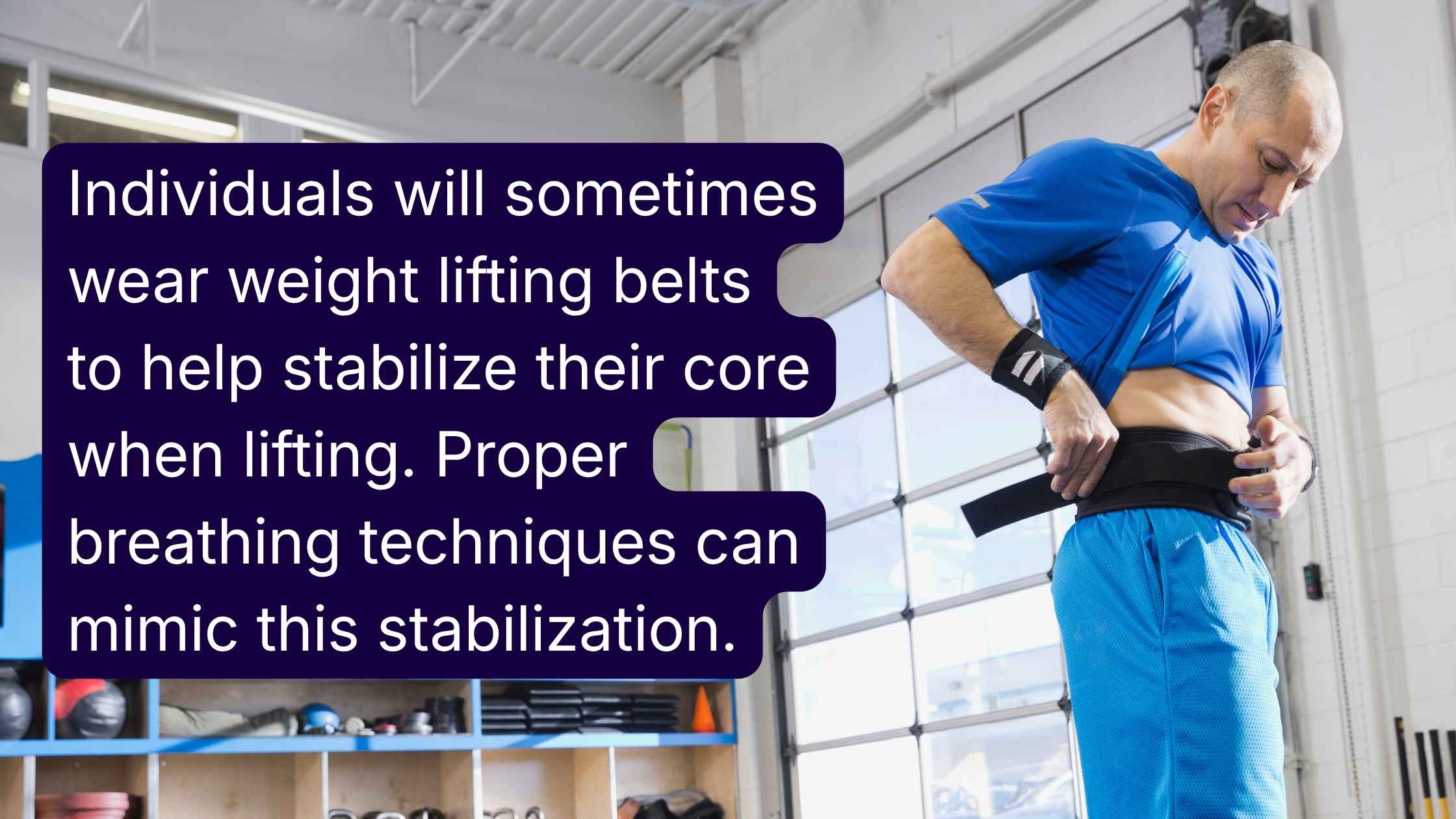
The Deadlift Example: Coordination Under Load
Let’s look at the deadlift. A common mistake is holding your breath for the entire rep or breathing randomly. This disrupts your rhythm and causes early fatigue.
A scientifically sound approach involves matching your breath to the phase of the movement:
- The Inhale (Eccentric Phase): Breathe in deeply as you lower the weight to create tension and control.
- The Exhale (Concentric Phase): Breathe out during the effort of standing up to help generate force and maintain composure.
This coordination ensures you aren't just moving weight; you are optimizing your body's potential through controlled, rhythmic cycles.
Why People Get This Wrong
Breathing is automatic, so most people don't treat it as a skill. However, high-intensity training is not a passive activity; it requires intentionality. When intensity spikes, the body often defaults to shallow breathing or excessive breath-holding, which can blunt the natural release of growth-promoting hormones and slow down tissue repair.¹
How to Fix Your Mechanics
You don't need a complicated system, just awareness and consistency:
- Match Breath to Movement: Generally, inhale during the lowering phase and exhale during the effort phase.
- Avoid Excessive Breath Holding: Unless you are using advanced techniques under expert guidance, prolonged breath-holding can lead to dizziness and unnecessary fatigue.
- Maintain Rhythm: Rhythmic breathing helps normalize your body's natural cycles, much like how consistent sleep supports hormone regulation.²
- Practice on Lighter Sets: Build the habit when the stakes are low so it remains automatic when the weight gets heavy.
The Payoff
When you dial in your breathing, the metabolic benefits compound: you'll see more reps before fatigue, better control, and more consistent performance across your entire workout.³
If you've made it this far, you are taking steps to improve your health. Whether that's losing weight, clearing your brain fog, or optimizing your body composition, click here if you're ready to see how GobyMeds can assist you on your journey.
Sources (Works Cited)
¹ Corpas, E., et al. (1992). Human growth hormone and human aging. Endocrine Reviews, 14(1), 20-39. https://pubmed.ncbi.nlm.nih.gov/8449176/
² Van Cauter, E., et al. (1998). Simultaneous stimulation of slow-wave sleep and growth hormone secretion. The Journal of Clinical Investigation, 101(12), 2607-2615. https://www.jci.org/articles/view/119972
³ Papadakis, M. A., et al. (1996). Growth hormone replacement in healthy older men improves body composition but not functional ability. Annals of Internal Medicine, 124(8), 708-716. https://www.acpjournals.org/doi/10.7326/0003-4819-124-8-199604150-00003
⁴ Kraemer, W. J., et al. (1992). Hormonal and growth factor responses to heavy resistance exercise protocols. Journal of Applied Physiology, 73(4), 1385-1393. https://pubmed.ncbi.nlm.nih.gov/1447159/
⁵ GobyMeds. (2024). Sermorelin Therapy Protocol Guide. Internal Patient Documentation.




.svg)