

How to Get More Fiber in Your Diet
Written by: Ellie Hiller | BSN, RN, HSN Nutrition Coach
Most people eating a standard American diet only consume about half of their daily fiber needs.[1][2] That is a bigger deal than many people realize.
Fiber helps support digestion, blood sugar control, heart health, fullness, and overall diet quality. It is one of those foundational nutrition habits that quietly improves a lot of things at once.
The good news is that eating more fiber does not have to be complicated. You do not need a perfect meal plan or a dramatic nutrition overhaul. In most cases, getting more fiber comes down to a handful of consistent food choices repeated over time.
How much fiber should you aim for?
A common recommendation for adults is about 14 grams of fiber per 1,000 calories consumed, which works out to roughly 25 grams per day for many women and 38 grams per day for many men.[2]
For example, someone eating 2,000 calories per day should aim for roughly 28 grams of fiber daily.
The key goal: consistently hit at least the minimum recommendation.
That does not mean every single day has to be perfect. It simply means fiber should be something you pay attention to on purpose, just like protein.
Best food sources of fiber
Foods rich in fiber include:
- Beans and legumes
- Avocados
- Fruits and vegetables
- Oats
- Nuts and seeds
- Whole grain breads and pasta
- Brown rice
- Wheat bran
Fun fact: one large avocado contains about 13 grams of fiber, nearly half the minimum daily recommendation for women.[3]
One of the easiest ways to think about fiber is this: the more your meals include plant foods in their whole or minimally processed form, the easier it becomes to get enough fiber without forcing it.
That is why meals built around fruit, vegetables, oats, beans, lentils, nuts, and whole grains usually feel more balanced and more satisfying than meals built mostly from refined snack foods and processed carbohydrates.
5 simple ways to increase fiber intake
The best fiber strategy is not the most extreme one. It is the one you can actually maintain.

1. Choose whole grains over refined grains
Look for “whole grain” on ingredient labels and aim for foods that contain at least 1 gram of fiber for every 10 grams of carbohydrates.
This is one of the easiest upgrades to make because it does not require you to reinvent your meals. You are simply swapping what is already there.
That might look like:
- whole grain bread instead of white bread
- whole grain pasta instead of regular pasta
- oats instead of sugary breakfast cereals
- brown rice instead of more refined grain options
These are not flashy changes, but they add up quickly over the course of a week.
2. Keep vegetables ready to grab
Raw carrots, broccoli, peppers, and other colorful vegetables make convenient high-fiber snacks. DON’T REMOVE THE SKIN!!! Eating the skin of fruits and vegetables helps maximize fiber intake.
This is one of the most practical strategies because it removes friction.
People are much more likely to eat fiber-rich foods when they are visible, washed, and easy to grab. If vegetables require a full preparation project every time, most people will not reach for them consistently.
The same idea applies to fruit. Apples, pears, berries, oranges, and other easy options can make fiber intake feel much more realistic during a busy day.
3. Add beans and legumes regularly
Roasted chickpeas, black beans, lentils, or edamame are easy ways to boost fiber at meals while also adding protein and important micronutrients.
This is one of the best nutrition habits to build because beans and legumes do a lot at once. They bring fiber, they bring staying power, and they can help make meals more balanced.
You do not need to eat them in a perfect or fancy way either.
They can be added to:
- tacos
- grain bowls
- soups
- salads
- pasta dishes
- simple lunch meal prep
Even a few additions each week can make a noticeable difference.
4. Drink enough water
Fiber works best when paired with adequate hydration. A good starting point is half your body weight in ounces of water daily.
This matters because when fiber intake goes up, water needs usually need attention too. Fiber and hydration work together, especially when you are trying to improve regularity and digestion.[4]
That does not mean there is one perfect number for every person. But if you are increasing fiber and ignoring fluids, you may not feel as good as you could.
5. Increase fiber slowly
Adding too much fiber too quickly can cause bloating and discomfort. Gradually increase intake over time to allow your digestive system to adjust.[4]
This is probably the biggest mistake people make when they decide to “get healthy” overnight. They jump from very little fiber to a huge amount all at once, then assume fiber is the problem.
Usually, the issue is not fiber itself. It is the pace of the increase.
A better approach is to build slowly:
- choose one higher-fiber breakfast
- add one vegetable to lunch
- include beans a few times per week
- swap one refined grain for a whole-grain option
Those changes are much easier to tolerate and much easier to maintain.
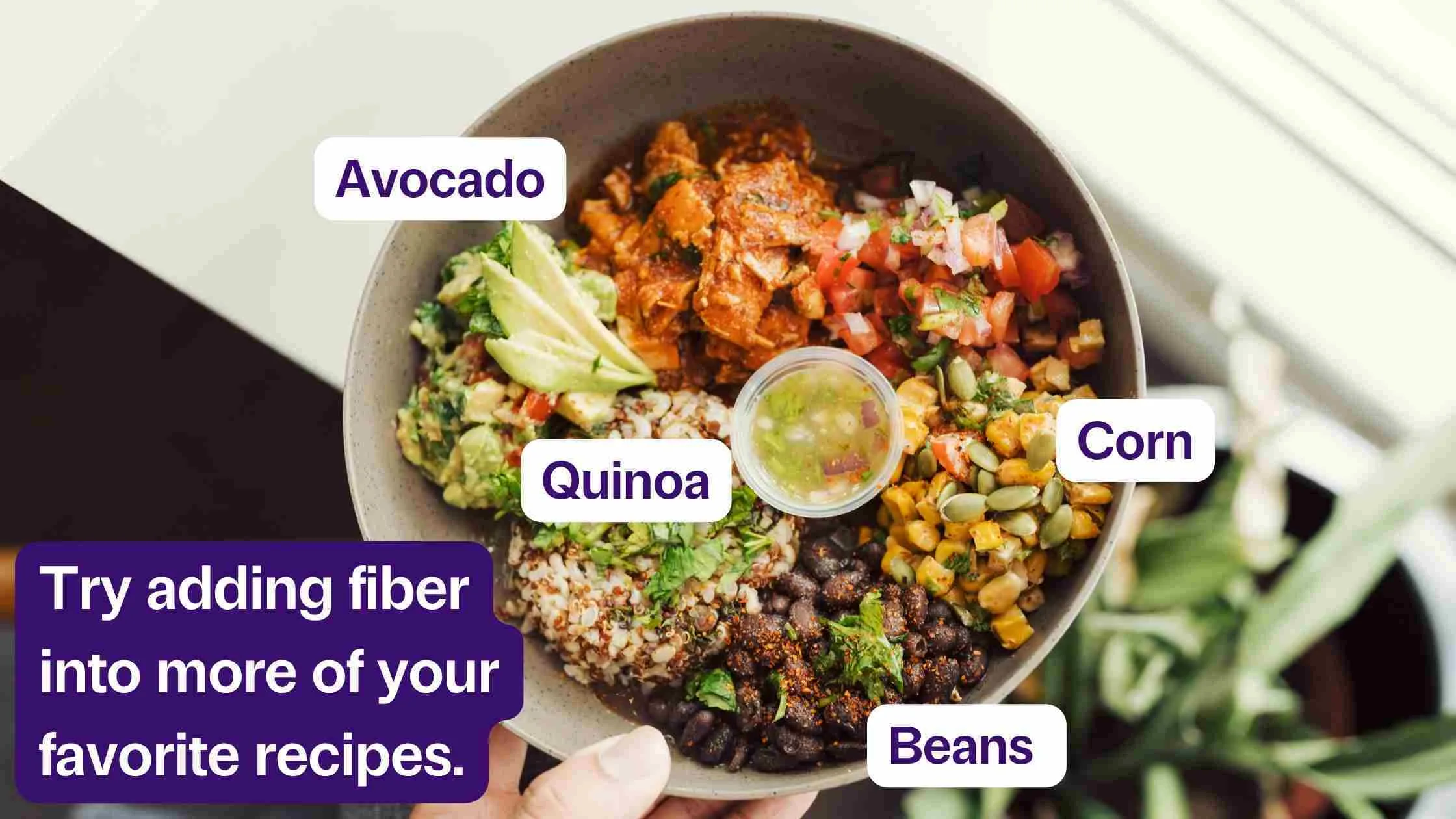
What getting more fiber can look like in real life
For most people, eating more fiber is less about chasing one superfood and more about layering small habits together.
For example:
- Oatmeal with berries at breakfast
- A sandwich on whole grain bread at lunch
- Raw vegetables or fruit as a snack
- Beans or lentils added to dinner
That kind of day can move fiber intake up quickly without making food feel restrictive or overly complicated.
This is also why fiber does not need to become a math problem. Awareness helps, especially at first, but the bigger goal is learning what fiber-rich eating actually looks like in normal life.
Why consistency matters more than perfection
Fiber is one of those nutrition habits where consistency matters much more than intensity.
You do not need one “perfect” day with chia seeds, bran cereal, kale salad, and lentil soup if the rest of the week falls apart. What works better is building a routine where fiber shows up often enough that it becomes part of how you eat without needing constant thought.
That is why the tips above work so well. They are simple enough to repeat.
And repeatable habits are what ultimately improve health over time.
The Bottom Line
Increasing fiber doesn’t have to be complicated. Simple habits like swapping refined grains for whole grains, eating more fruits and vegetables, and adding legumes to meals can dramatically improve overall health over time.
The goal is not to do everything at once. The goal is to build a way of eating that makes fiber easier to get on a regular basis. Start with a few realistic changes, be consistent, and let those habits build over time.
Footnotes
[1] MedlinePlus. “Dietary Fiber.” https://medlineplus.gov/dietaryfiber.html
[2] National Academies of Sciences, Engineering, and Medicine. “Dietary Reference Intakes for Energy, Carbohydrate, Fiber, Fat, Protein, and Amino Acids.” https://nap.nationalacademies.org/read/10490/chapter/8
[3] U.S. Department of Agriculture. FoodData Central. “Avocados, raw, all commercial varieties.” https://fdc.nal.usda.gov/
[4] National Institute of Diabetes and Digestive and Kidney Diseases. “Eating, Diet, & Nutrition for Constipation.” https://www.niddk.nih.gov/health-information/digestive-diseases/constipation/eating-diet-nutrition




.svg)