Skip the Elevator: The Science of Why Taking the Stairs is a Metabolic Powerhouse
Guest Writer: Dr. Sean Hiller, PT, DPT, CSCS, BFR-L2, USAW-L1 (Owner of Vulcan Performance)
If you’re serious about improving your fitness, the small, physiological demands you place on your body every day matter more than you might think. One of the simplest—and most scientifically overlooked—opportunities for metabolic optimization is choosing the stairs over the elevator.
While it’s not as "flashy" as a boutique gym class, stair climbing is a potent stimulus for strength, cardiovascular conditioning, and hormone regulation. At GobyMeds, we focus on the science of how your body responds to stress and recovery, and the stairs are a perfect example of a "micro-workout" that drives macro results.

Walking vs. Training: Understanding the Stimulus
Let’s be clear: walking is excellent for general health and circulation. However, for most individuals, flat-ground walking eventually ceases to be a meaningful training stimulus.
The human body is an efficiency machine; it adapts quickly to repetitive, low-intensity movements by finding ways to use the least amount of energy possible. To drive real physiological improvement—what scientists call supercompensation—you must introduce a challenge that forces the body to adapt.
Why Stairs Drive Metabolic Change
Stair climbing forces your body to work against gravity in a way that horizontal movement simply cannot match. Every flight of stairs demands:
- Higher Force Production: You are essentially performing repeated, explosive single-leg step-ups.
- Greater Range of Motion: Your hips and knees move through a deeper arc, engaging more muscle fibers in the glutes and hamstrings.
- Intense Cardiovascular Demand: Research indicates that stair climbing can reach high-intensity levels quickly, which is a proven trigger for Human Growth Hormone (HGH) release.
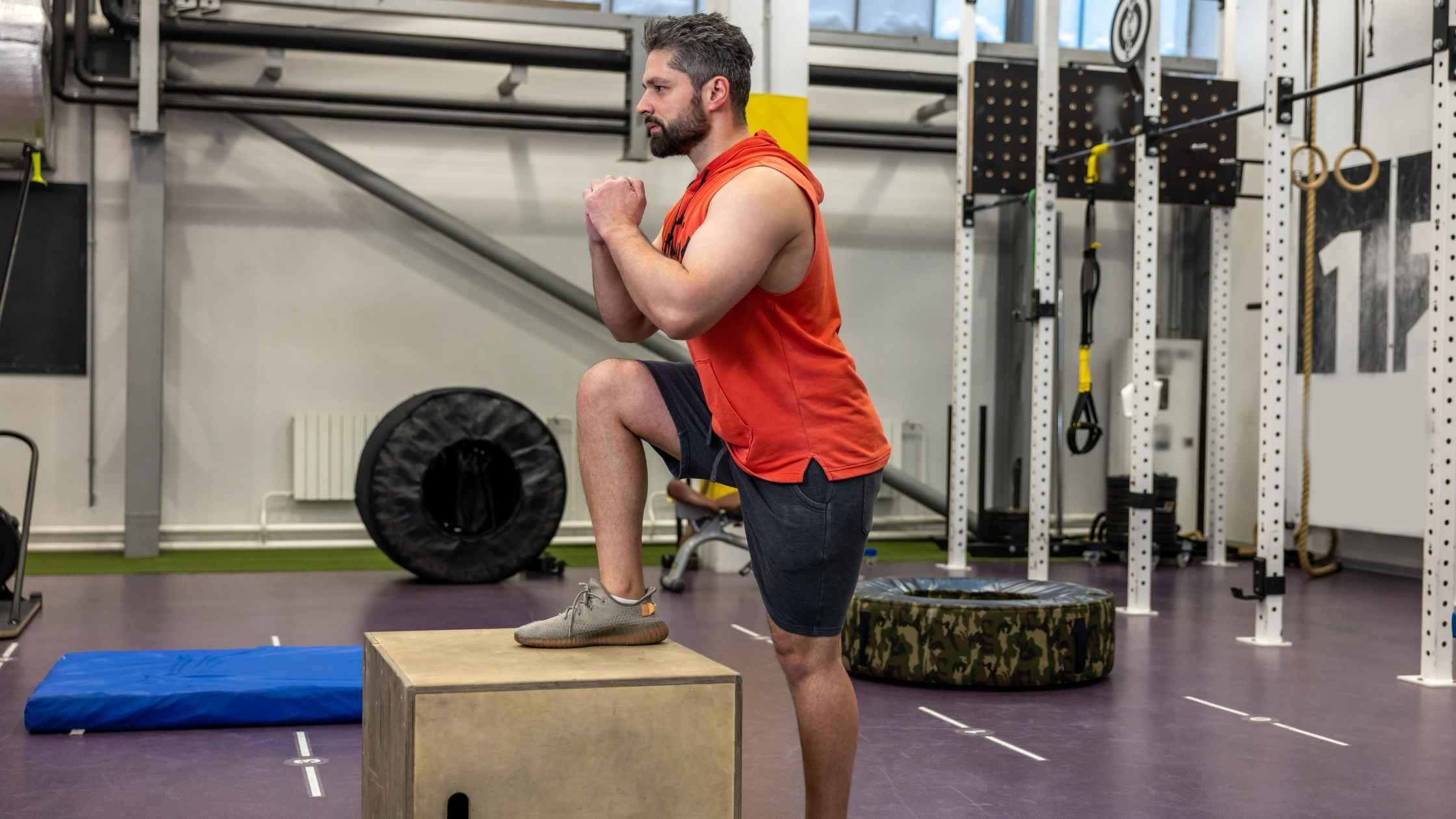
Research Insight: Studies on hormonal responses to exercise show that high-intensity resistance-style movements—like the vertical push of a stair climb—stimulate the pituitary gland to release HGH in pulsatile waves, supporting muscle maintenance and fat metabolism.
Built-In Strength and "Secret" Cardio
When you take the stairs, you aren't just "getting steps in." You are engaging in functional resistance training:
- The Posterior Chain: Your glutes drive hip extension, while your quads work to extend the knee against your entire body weight.
- Stability and Balance: Because each step is a single-leg effort, your core and calves must stabilize your frame, building coordination that carries over to daily life.
- Metabolic Engine: Muscle is your body's metabolic engine; it burns more calories at rest than fat tissue. By preserving and building lower-body muscle through the stairs, you are helping to keep your basal metabolic rate (BMR) elevated.
Scaling the Intensity
One of the best things about stair climbing is its inherent scalability. You don't need a complex program to increase the benefits:
- Increase Velocity: Move faster to spike your heart rate and improve aerobic capacity.
- Double the Load: Taking steps two at a time increases the strength demand on the glutes and quads.
- External Resistance: Carrying a bag or groceries adds "load," further challenging your bone density and muscle mass—similar to how HGH optimization supports bone remodeling.
The Compounding Effect of Small Decisions
The "hidden" danger of modern convenience is that it allows our HGH and metabolic signals to decline prematurely, a process sometimes called somatopause. Choosing the harder path—the stairs—is a proactive way to push back against age-related decline.
Over weeks and months, these few minutes of intensity lead to:
- Improved Cardiovascular Fitness: Better oxygen utilization and heart health.
- Increased Work Capacity: The ability to do more throughout your day without fatigue.
- Body Composition Shifts: Helping your body favor lean muscle over stored fat.
Final Thought
You don’t need every fitness gain to come from a structured 60-minute workout. Some of the most effective metabolic changes come from how you move during the "in-between" moments of your day.
If you've made it this far, you are already taking steps to improve your health. Whether that's losing weight, clearing your brain fog, or optimizing your body composition, click here to see how GobyMeds can assist you on your journey.




.svg)