

Testosterone Replacement Therapy (TRT): Benefits, Risks, Labs, and What to Expect
If you have been feeling unlike yourself lately, low testosterone may already be on your radar. Maybe your energy is down. Maybe your workouts are not translating the way they used to. Maybe your libido, focus, motivation, or recovery has changed enough that you know something is off.
That is often when people start searching for testosterone replacement therapy, or TRT.
TRT can be a helpful treatment for the right patient, but it is also one of the most misunderstood topics in men’s health. It is not simply about chasing higher numbers. It is not the same thing as bodybuilding steroid use. And it is not something that should be started based on a single lab value or a vague feeling of burnout.
A responsible TRT program starts with symptoms, medical history, and lab work. From there, treatment is tailored to the patient and monitored over time to help restore testosterone to a normal physiologic range rather than pushing levels too high.[1][2]
In this guide, we will break down what TRT is, who it may be for, how it works, what forms it can come in, why lab monitoring matters, and the most common misconceptions patients should know before they start.
What Is Testosterone Replacement Therapy?
Testosterone replacement therapy is a medical treatment used to restore testosterone levels in men with clinically confirmed testosterone deficiency, also called hypogonadism.[1][2]
Hormone therapy is a broad category that can include different hormones for different needs. TRT is one specific type of hormone therapy focused on restoring testosterone when the body is not producing enough of it. That distinction matters because TRT should be evaluated, prescribed, and monitored according to testosterone-specific clinical standards rather than treated like a generic wellness product.[1][2]
Testosterone is a key hormone involved in much more than sex drive. It plays a role in:
- Libido and sexual function
- Mood and motivation
- Muscle mass and strength
- Bone density
- Red blood cell production
- Body composition
- Energy and recovery

When testosterone levels are low and symptoms are present, TRT may help improve quality of life by replacing what the body is not producing adequately.[1][2]
That said, not every tired, stressed, or aging man has medical testosterone deficiency. Both the Endocrine Society and the American Urological Association emphasize that diagnosis should be based on symptoms plus consistently low testosterone levels on repeat testing, not on symptoms alone.[1][2]
Why Testosterone Levels Matter
Testosterone naturally changes over time, and levels can also be affected by sleep, acute illness, body composition, medications, training stress, and underlying endocrine conditions.[1][5]
This is one reason low testosterone can be tricky. Many of the symptoms overlap with common issues like poor sleep, high stress, depression, sleep apnea, overtraining, chronic dieting, or medication side effects. Fatigue alone does not automatically mean you need TRT.
At the same time, true testosterone deficiency is real, and it can meaningfully affect physical and emotional well-being. According to the AUA guideline, men with testosterone deficiency may experience low sex drive, erectile dysfunction, low energy, reduced lean mass, depressed mood, anemia, or lower bone density.[2]
The goal is not to label every symptom as “low T.” The goal is to identify patients who actually have testosterone deficiency and treat them appropriately.
Signs and Symptoms That May Prompt a TRT Evaluation
TRT is usually considered after a patient develops symptoms consistent with low testosterone and then confirms low levels through lab testing.[1][2]
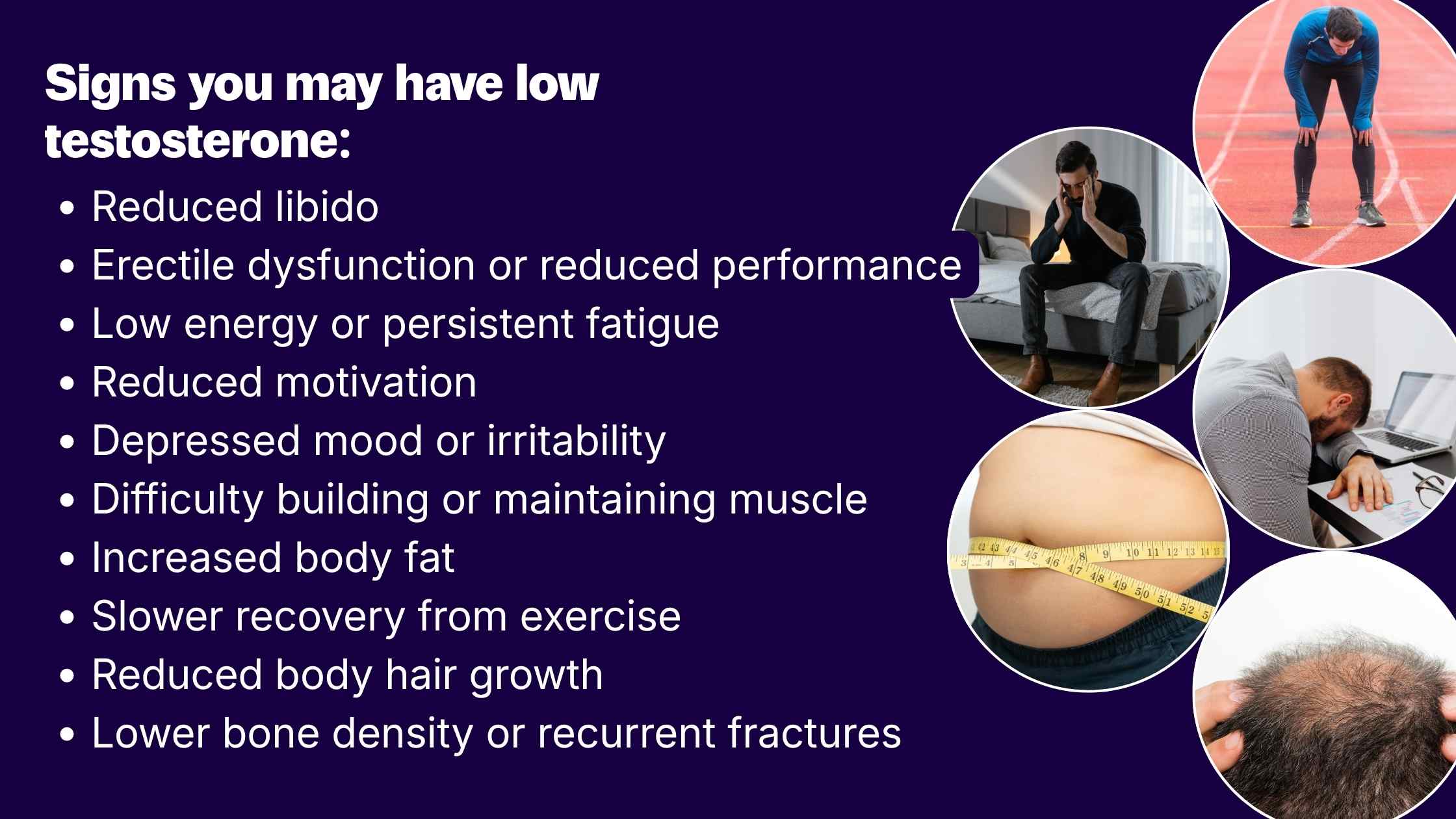
Common symptoms can include:
- Reduced libido
- Erectile dysfunction or reduced sexual performance
- Low energy or persistent fatigue
- Reduced motivation
- Depressed mood or irritability
- Difficulty building or maintaining muscle
- Increased body fat
- Slower recovery from exercise
- Reduced body hair growth
- Lower bone density or recurrent fractures
Some men are more likely to warrant testing even before the classic “low T” conversation begins. The AUA notes that clinicians should consider testosterone testing in certain higher-risk patients, including men with unexplained anemia, bone density loss, diabetes, chronic opioid use, pituitary dysfunction, HIV/AIDS, prior chemotherapy, testicular radiation exposure, or male infertility.[2]
That does not mean every person in those groups needs TRT. It means there is enough overlap to justify a closer look.
Who Is TRT For?
In general, TRT is for adult men who have both:
- Symptoms or signs consistent with testosterone deficiency
- Repeated early-morning lab results showing low testosterone levels[1][2]
This distinction matters.
Current guidelines do not recommend routine testosterone screening in the general population, and the FDA notes that testosterone products are approved for men with low testosterone linked to a recognized medical condition, not simply because someone feels older or wants a performance edge.[1][3][4]
For the right candidate, TRT may help improve symptoms such as low libido, erectile function, anemia, bone mineral density, lean body mass, and mood-related symptoms.[2]
Who May Need Extra Caution or May Not Be a Good Candidate?
TRT is not the right fit for everyone. The Endocrine Society recommends against starting testosterone therapy in men who are planning fertility in the near term and in men with certain conditions unless they have been fully evaluated and cleared appropriately.[1]
Examples of situations that may require extra caution or delay treatment include:
- Planning fertility in the near future
- Elevated hematocrit
- Untreated severe obstructive sleep apnea
- Recent heart attack or stroke
- Uncontrolled heart failure
- Known or suspected prostate cancer without appropriate evaluation
- Significant prostate-related findings that need workup first
- Thrombophilia or other clotting concerns[1]
This is another reason the “online low T shortcut” mindset can be risky. A quality TRT program is not just about writing a prescription. It is about determining whether testosterone is appropriate in the first place.
What Causes Low Testosterone?
Low testosterone can happen for different reasons, and those reasons matter because they can influence both treatment and monitoring.
Broadly, testosterone deficiency can be caused by:
- Primary hypogonadism, where the testes are not producing enough testosterone
- Secondary hypogonadism, where the pituitary or hypothalamus is not sending the right hormonal signals
- Mixed or functional causes, including obesity, chronic illness, some medications, and other endocrine or systemic factors[1][2][5]
That is why good workups often include more than just a testosterone number. Hormones such as LH and sometimes prolactin can help clarify whether the issue is primarily testicular or related to pituitary signaling.[1][2]
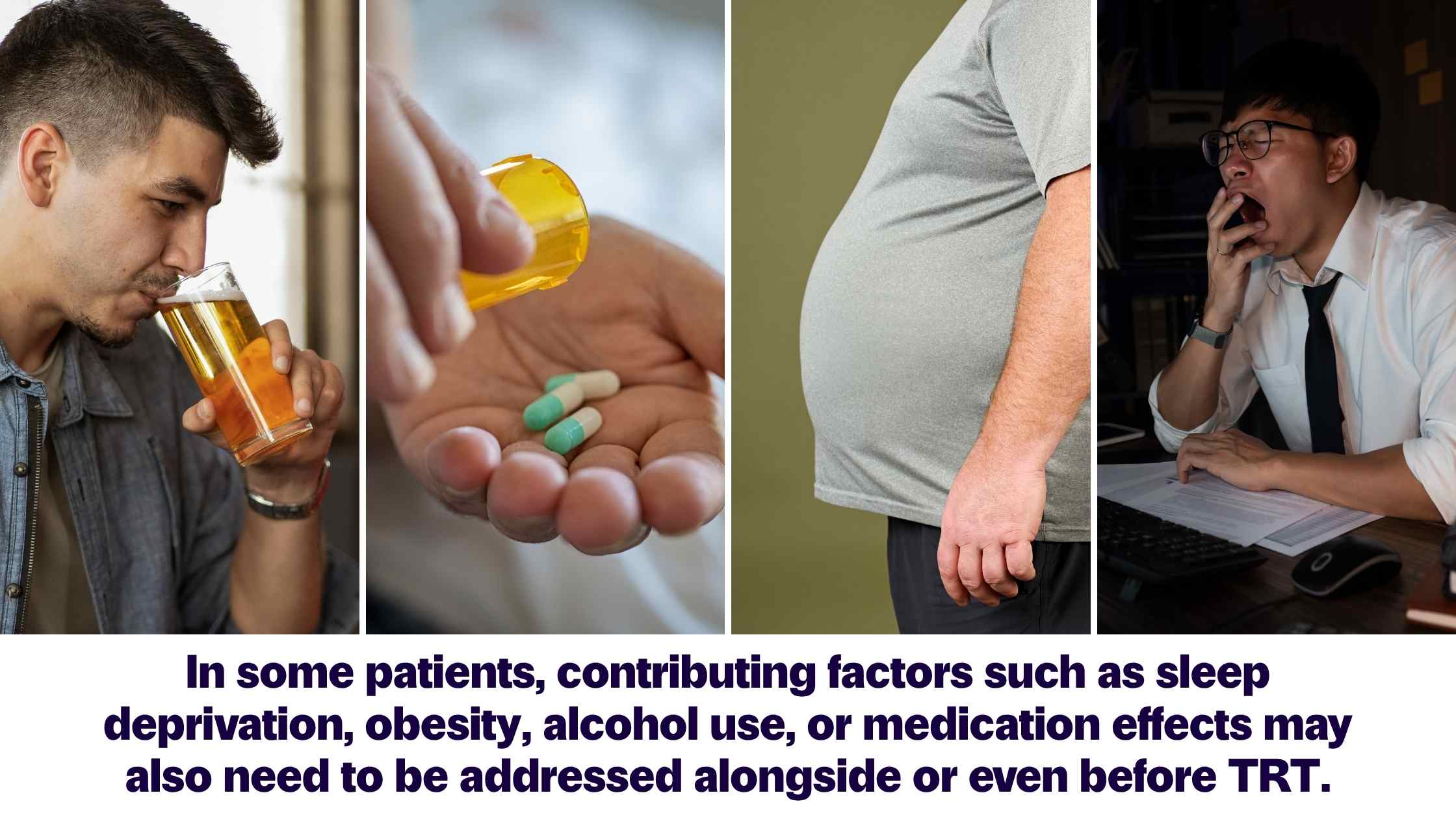
In some patients, contributing factors such as sleep deprivation, obesity, alcohol use, or medication effects may also need to be addressed alongside or even before TRT.
How TRT Works
TRT works by supplying testosterone from outside the body to bring levels back into a more normal range when natural production is insufficient.[1][2]
The basic idea is straightforward: if symptoms and testing confirm deficiency, carefully dosed testosterone can help restore the hormonal environment needed for normal male function.
What matters is how it is done.
Effective TRT is not about getting testosterone “as high as possible.” It is about symptom improvement, safe dosing, and ongoing monitoring so levels remain in an appropriate physiologic range.[1][2]
Depending on the patient and the formulation used, TRT may improve some symptoms faster than others. Patients often notice changes in libido, energy, or sense of well-being before more gradual changes in body composition or bone health.
TRT Options: Subcutaneous Injection vs Topical Hypospray
There are multiple testosterone formulations on the market, including injections and transdermal products.[3] If your program offers TRT as either a subcutaneous injection or a topical hypospray, the best option often comes down to lifestyle, preference, skin tolerance, and how your lab values respond over time.
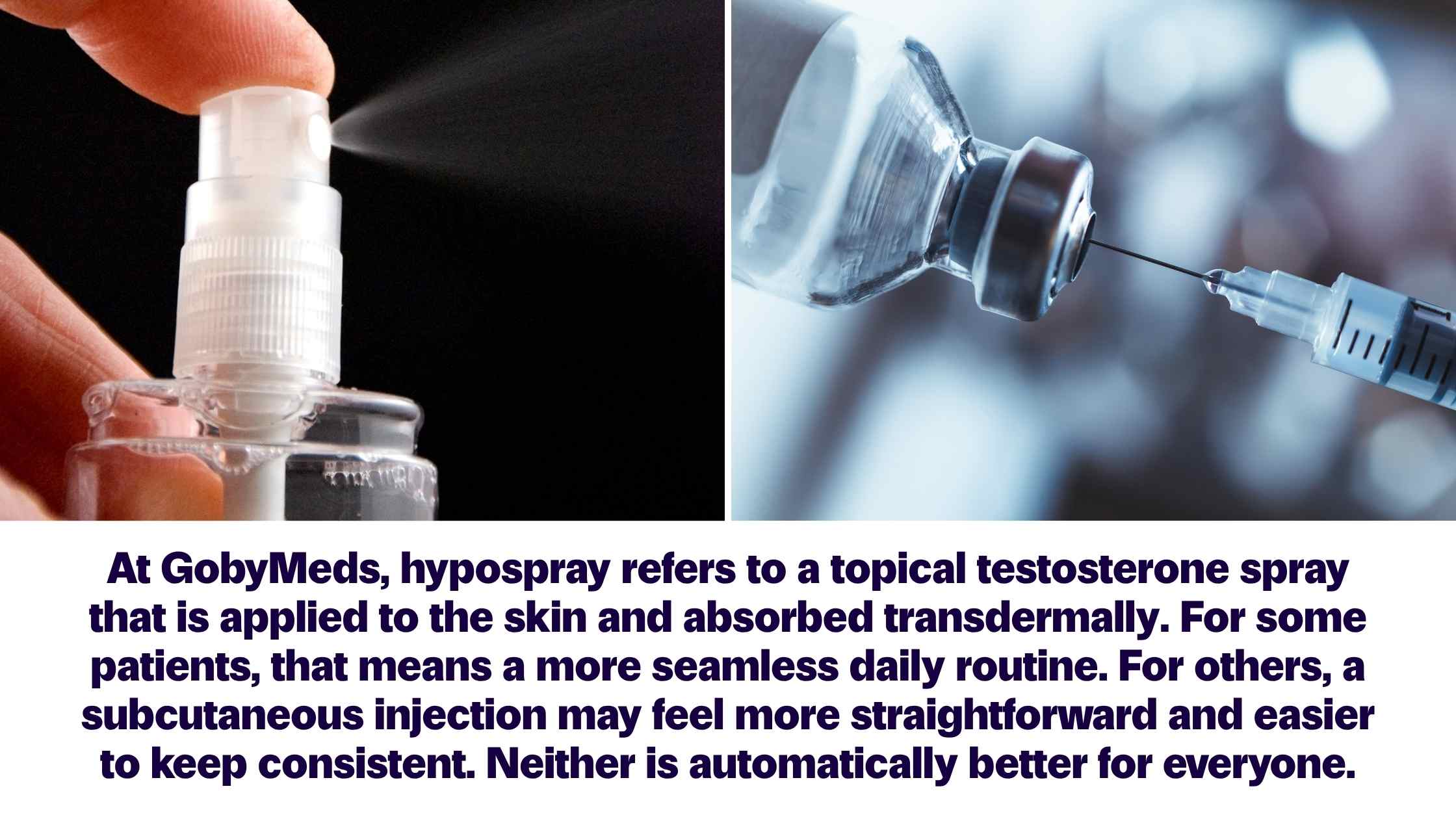
At GobyMeds, hypospray refers to a topical testosterone spray that is applied to the skin and absorbed transdermally. For some patients, that means a more seamless daily routine. For others, a subcutaneous injection may feel more straightforward and easier to keep consistent. Neither is automatically better for everyone.
Subcutaneous TRT Injections
Subcutaneous TRT is delivered with a small needle into the fatty tissue just under the skin rather than deep into muscle. This route has been studied as an effective way to maintain therapeutic testosterone levels in men with hypogonadism.[6]
Why some patients prefer it:
- Typically fits a predictable routine
- Often uses a smaller needle than traditional intramuscular injections
- Avoids daily topical application
- No risk of skin-to-skin transfer to partners, children, or pets
Things to consider:
- You need to be comfortable with self-injection or guided injection
- Dosing schedule matters
- Follow-up labs are still essential
Topical TRT Hypospray
A topical hypospray is a testosterone spray applied to the skin and absorbed transdermally. For patients who want to avoid needles, this can be an appealing option.
Why some patients prefer it:
- Needle-free routine
- Simple daily application
- Easy to work into a morning routine
Things to consider:
- Daily consistency matters
- Application technique matters
- Skin irritation can happen with some topical products
- Transdermal testosterone products can carry a risk of accidental transfer through skin contact if they are not used correctly[7]
That last point is important. With topical testosterone, patients need to follow application instructions carefully, allow the product to dry as directed, and take appropriate steps to reduce accidental exposure to others.
Why Lab Work Is a Non-Negotiable Part of TRT
One of the biggest misconceptions around TRT is that treatment begins and ends with how you feel.
Symptoms matter. But symptoms alone are not enough.
Lab work is central to TRT for two reasons:
- It helps confirm whether testosterone deficiency is actually present
- It helps make treatment safer once therapy begins[1][2]
Labs Before Starting TRT
A thorough TRT evaluation often includes:
- Two separate early-morning total testosterone tests[1][2]
- Free testosterone in select cases when clinically indicated[1]
- LH to help determine whether the issue may be primary or secondary[1][2]
- Prolactin in patients with low testosterone plus low or low-normal LH[2]
- Hemoglobin and hematocrit before treatment to assess polycythemia risk[2]
- PSA in men over 40 before starting therapy, when appropriate, to help rule out an occult prostate issue[2]
- Additional labs based on the patient, such as metabolic markers or other endocrine testing
That workup helps distinguish true deficiency from temporary or misleading lab changes and helps identify causes that may need separate attention.
Labs After Starting TRT
Once TRT begins, follow-up does not stop.
The AUA recommends checking testosterone after therapy starts and then measuring testosterone levels every 6 to 12 months while on treatment.[2] Monitoring is used to make sure the dose is actually achieving appropriate levels and to determine whether adjustments are needed.
Follow-up monitoring may also include:
- Hematocrit and hemoglobin
- PSA and prostate-related follow-up when indicated
- Blood pressure review
- Side-effect review
- Symptom response and overall treatment goals[1][2][4]
This is how TRT stays responsible. The goal is not just to prescribe testosterone. The goal is to keep levels in range, watch for side effects, and match treatment to the patient over time.
Common Benefits Patients May Notice on TRT
Not every patient experiences the same response, and TRT is not a cure-all. But in properly selected men, testosterone therapy may improve several meaningful outcomes.
The AUA guideline notes that patients may see improvements in:
- Erectile function
- Low sex drive
- Anemia
- Bone mineral density
- Lean body mass
- Depressive symptoms[2]
For many patients, the biggest benefit is not one dramatic change. It is the return of a more stable baseline: better energy, better recovery, better drive, and a stronger sense that their body is responding the way it should.

Risks and Side Effects of TRT
Like any legitimate medical therapy, TRT has both potential benefits and potential risks.
Possible side effects and safety considerations can include:
- Acne or oily skin
- Breast tenderness or gynecomastia-related symptoms
- Fluid retention
- Increased hematocrit or polycythemia
- Blood pressure effects with some products
- Suppression of sperm production and reduced fertility
- Skin transfer risk with topical products
- Need for prostate monitoring in appropriate patients[1][2][4][7]
This is also where nuance matters.
Cardiovascular risk has been one of the most debated areas in TRT. In February 2025, the FDA announced class-wide labeling changes for testosterone products after reviewing newer data, including removal of the prior boxed warning about increased cardiovascular risk for testosterone products as a class. At the same time, the FDA retained limitations around age-related hypogonadism and required product-specific blood pressure information for some products.[4]
The takeaway is not that TRT is risk-free. The takeaway is that TRT should be individualized, monitored, and used for appropriate indications rather than marketed as a one-size-fits-all wellness shortcut.
How TRT Works at GobyMeds
TRT should feel structured, not confusing. A thoughtful program gives patients a clear path from symptoms to testing to treatment to follow-up.

At GobyMeds, the general TRT process is designed to follow that logic:
1. Start with symptoms and health history
Treatment does not begin with a sales page. It begins with understanding what is going on. That includes symptoms, medical background, medications, prior hormone history, and whether there are any factors that may change the treatment plan.
2. Complete lab work
Lab testing helps determine whether low testosterone is actually present and whether TRT is appropriate. It also creates a baseline for safe monitoring over time. This is a core part of responsible hormone care, not an optional extra.[1][2]
3. Review results with a licensed provider
If labs and symptoms support testosterone deficiency, a licensed clinician can review your case and determine whether TRT may be appropriate. That review also helps identify whether additional follow-up, further workup, or a different strategy may make more sense first.
4. Choose the treatment format that fits your plan
If prescribed, GobyMeds offers TRT as either:
- A subcutaneous injection
- A topical testosterone spray called hypospray
The right choice may depend on your routine, your comfort with injections, your skin sensitivity, your household situation, and how your levels respond on follow-up testing.
5. Monitor and adjust over time
TRT is not “set it and forget it” therapy. Follow-up lab work and clinical check-ins help make sure testosterone levels stay in an appropriate range, symptoms are improving, and treatment remains aligned with safety goals.[1][2]
This part is one of the biggest differences between a legitimate TRT program and a careless one. Good hormone care does not stop at prescribing. It includes monitoring.
TRT and Fertility: What Many Men Miss
One of the most important conversations in TRT is also one of the most overlooked: fertility.
Exogenous testosterone can suppress the body’s own sperm production. That means TRT may lower fertility, sometimes significantly, while you are on treatment.[1][5]
If you want to conceive in the near future, that needs to be part of the conversation before starting TRT. For some men, the better path may involve a fertility-preserving strategy rather than straightforward testosterone replacement.
This is not a side note. It is one of the most important screening questions in the entire TRT process.
Common TRT Misconceptions
Misconception 1: TRT is basically the same thing as anabolic steroid use
It is not.
Medical TRT is designed to restore testosterone to a normal physiologic range in men with confirmed deficiency. Anabolic steroid abuse typically involves supraphysiologic dosing for physique or performance enhancement.[1][2][3]
Misconception 2: One low testosterone result means you need TRT
Also false.
Guidelines recommend repeat early-morning testing because testosterone levels fluctuate and can be affected by illness, stress, sleep, and assay variability.[1][2][5]
Misconception 3: More testosterone is always better
This mindset causes problems.
The goal of TRT is not to chase the highest possible number. It is to improve symptoms while staying in an appropriate range and monitoring for adverse effects.[1][2]
Misconception 4: TRT is only about sex drive
Low testosterone can affect libido, but that is not the full picture. Testosterone also influences energy, mood, lean mass, bone density, red blood cell production, and overall function.[1][2]
Misconception 5: TRT is automatically appropriate if you are getting older
Not necessarily.
Testosterone changes with age, but age alone does not confirm hypogonadism. The FDA specifically retains limitations of use language for age-related hypogonadism, and guidelines stress the need for symptoms plus documented low levels.[1][3][4]
Misconception 6: TRT causes prostate cancer
This is an area where patients often hear extremes. Current evidence has not definitively shown that testosterone therapy causes prostate cancer, but prostate screening and follow-up still matter, especially in appropriate age groups and risk categories.[1][2][5]
Misconception 7: If TRT works, you do not need follow-up anymore
The opposite is true.
Feeling better does not replace lab monitoring. Good TRT depends on ongoing follow-up to confirm that levels remain appropriate and that treatment is still benefiting the patient safely.[1][2]
What a Responsible TRT Program Should Look Like
Whether care happens in person or through telehealth, a responsible TRT program should include:
- A symptom review and medical history
- Baseline labs, not just a quick questionnaire
- A discussion of fertility goals
- Route selection based on lifestyle and clinical fit
- Ongoing follow-up labs
- Dose adjustments based on results, not guesswork
- Monitoring designed to keep testosterone in a normal treatment range rather than pushing it beyond what is medically appropriate[1][2]
That process protects patients from two major mistakes: starting TRT when they do not actually need it, or taking TRT without the follow-up required to do it safely.
The Bottom Line on TRT
TRT can be a valuable treatment for men with true testosterone deficiency, but it should be approached with the same seriousness as any hormone therapy.
The right candidates are not identified by marketing buzzwords. They are identified by symptoms, history, repeat lab work, and careful clinician review.
If testosterone replacement is appropriate, the form matters, the dose matters, and the monitoring matters. Subcutaneous injections and topical hyposprays can both be effective options in the right setting, but neither should be treated like a casual “optimization” hack.
Real TRT is personalized. It is monitored. And when it is done well, it is designed to restore normal function, not manufacture extremes.
For patients who have been wondering whether low testosterone could be part of the picture, the next step is not guessing and it is not self-diagnosing from social media. It is getting evaluated properly, confirming the numbers, and building a treatment plan that makes sense for your body and your goals.
If you are exploring TRT through GobyMeds, that process starts with symptoms, lab work, and clinician review. From there, eligible patients can discuss whether a subcutaneous injection or topical testosterone hypospray makes more sense for their lifestyle and treatment plan.
FAQ: Testosterone Replacement Therapy
What is testosterone replacement therapy?
Testosterone replacement therapy, or TRT, is a medical treatment used to restore testosterone levels in men with confirmed testosterone deficiency. It is typically considered only when a patient has symptoms plus repeated low testosterone results on lab testing.[1][2]
Who is a good candidate for TRT?
The best candidates are adult men who have symptoms of low testosterone and two separate early-morning low testosterone readings confirmed through lab work. Medical history, fertility goals, and additional lab findings also help determine whether TRT is appropriate.[1][2]
Does TRT require lab work?
Yes. Lab work is a core part of TRT. It is used to confirm the diagnosis before treatment starts and to monitor testosterone levels, blood counts, and other safety markers after treatment begins.[1][2]
Why do I need two testosterone tests before starting TRT?
Testosterone levels naturally fluctuate and can be affected by sleep, illness, stress, and testing conditions. That is why guidelines recommend confirming low testosterone with two separate early-morning tests before making a diagnosis.[1][2][5]
What is the difference between subcutaneous TRT and a topical hypospray?
Subcutaneous TRT is injected just under the skin on a scheduled basis, while a topical hypospray is a testosterone spray applied to the skin daily. Injections avoid skin transfer risk, while topical options may appeal to patients who prefer a needle-free routine. The right choice depends on preference, consistency, and clinician guidance.[3][6][7]
Can TRT affect fertility?
Yes. Testosterone therapy can suppress sperm production and may reduce fertility while you are on treatment. Men who plan to conceive should discuss that before starting TRT.[1][5]
Is TRT the same as taking steroids?
No. Medical TRT is intended to restore testosterone to a normal range in men with confirmed deficiency. Non-medical anabolic steroid use usually involves higher-than-normal doses for physique or performance goals.[1][2][3]
Is TRT just for older men?
No. TRT is not based on age alone. It is based on symptoms, lab-confirmed deficiency, and clinician evaluation. Some older men may qualify, but age itself does not automatically make TRT appropriate.[1][3][4]
Does TRT cause prostate cancer?
Current evidence has not definitively shown that TRT causes prostate cancer, but prostate screening and follow-up remain important for appropriate patients before and during therapy.[1][2][5]
How often should testosterone levels be checked on TRT?
Monitoring schedules vary by treatment plan, but the AUA recommends checking testosterone after therapy begins and then every 6 to 12 months while on treatment.[2]
Wondering if TRT is right for you?
The first step is getting evaluated the right way. With GobyMeds, that means reviewing your symptoms, completing lab work, and working with a licensed provider to see whether TRT is appropriate and whether a subcutaneous injection or topical testosterone hypospray is the better fit.
Ready to see if you qualify for TRT through GobyMeds?
Start with your intake, complete your lab work, and get a clinician-guided treatment plan designed to help restore testosterone to a normal range safely and responsibly.
Footnotes
[1] Endocrine Society. “Testosterone Therapy for Hypogonadism Guideline Resources.” https://www.endocrine.org/clinical-practice-guidelines/testosterone-therapy
[2] American Urological Association. “Evaluation and Management of Testosterone Deficiency (2024).” https://www.auanet.org/guidelines-and-quality/guidelines/testosterone-deficiency-guideline
[3] U.S. Food and Drug Administration. “Testosterone Information.” https://www.fda.gov/drugs/postmarket-drug-safety-information-patients-and-providers/testosterone-information
[4] U.S. Food and Drug Administration. “FDA issues class-wide labeling changes for testosterone products.” February 28, 2025. https://www.fda.gov/drugs/drug-safety-and-availability/fda-issues-class-wide-labeling-changes-testosterone-products
[5] Endocrine Society. “Hypogonadism in Men.” Updated January 24, 2022. https://www.endocrine.org/patient-engagement/endocrine-library/hypogonadism
[6] Kaminetsky J, McCullough A, Hwang K, et al. “A 52-Week Study of Dose Adjusted Subcutaneous Testosterone Enanthate in Oil Self-Administered via Disposable Auto-Injector.” Journal of Urology. 2019. PubMed: https://pubmed.ncbi.nlm.nih.gov/30296416/
[7] U.S. Food and Drug Administration. “Investigation of skin-to-skin transfer risks of topically applied transdermal hormonal drugs.” https://www.fda.gov/science-research/fda-stem-outreach-education-and-engagement/investigation-skin-skin-transfer-risks-topically-applied-transdermal-hormonal-drugs




.svg)