

The Science of the GLP-1 "Super Responders"
In the rapidly evolving landscape of weight loss medications, a new term has moved from clinical journals to viral social media: the "Super Responder." While medications like Wegovy and Zepbound are effective for the majority of users, a specific subset of patients experiences weight loss that far exceeds clinical averages.
Whether you are using a brand-name pen or a compounded version of semaglutide or tirzepatide, understanding the "super responder" profile can help you set realistic expectations and manage your health safely.
What is a GLP-1 Super Responder?
In traditional clinical trials, a "responder" is someone who loses at least 5% of their body weight within the first three to six months. A super responder (also called a hyper-responder), however, operates on a different trajectory.
Based on large-scale real-world data from late 2025, super responders are generally defined by:
- The 15% Threshold: Losing more than 15% to 20% of their total body weight within the first year of treatment.¹
- Immediate Satiety: An almost instantaneous "silencing" of cravings and "food noise," often occurring within hours of the very first starter dose.
- Dose Sensitivity: Achieving significant, sustained weight loss while staying on the lowest possible "starter" doses, never needing to titrate up to the maximum manufacturer-recommended levels.²
The Genetic "Sweet Tooth" Discovery
For years, doctors wondered why two people of the same age and weight could have such different reactions to the same dose. In 2025, researchers at the Cleveland Clinic provided a major piece of the puzzle: the Neurobeachin (NBEA) gene.
Commonly referred to as the "sweet tooth gene," NBEA influences how the brain processes rewards and feelings of fullness. The study found that individuals with a specific "responsive" variation of this gene were 82% more likely to be highly responsive to GLP-1 medications.³ For these individuals, the medication isn't just suppressing appetite; it is chemically correcting a genetic predisposition toward high-sugar cravings.
Demographics: The Gender Gap
Recent meta-analyses, including a significant March 2026 study from Johns Hopkins, have revealed that biology—specifically sex hormones—plays a major role in response rates.
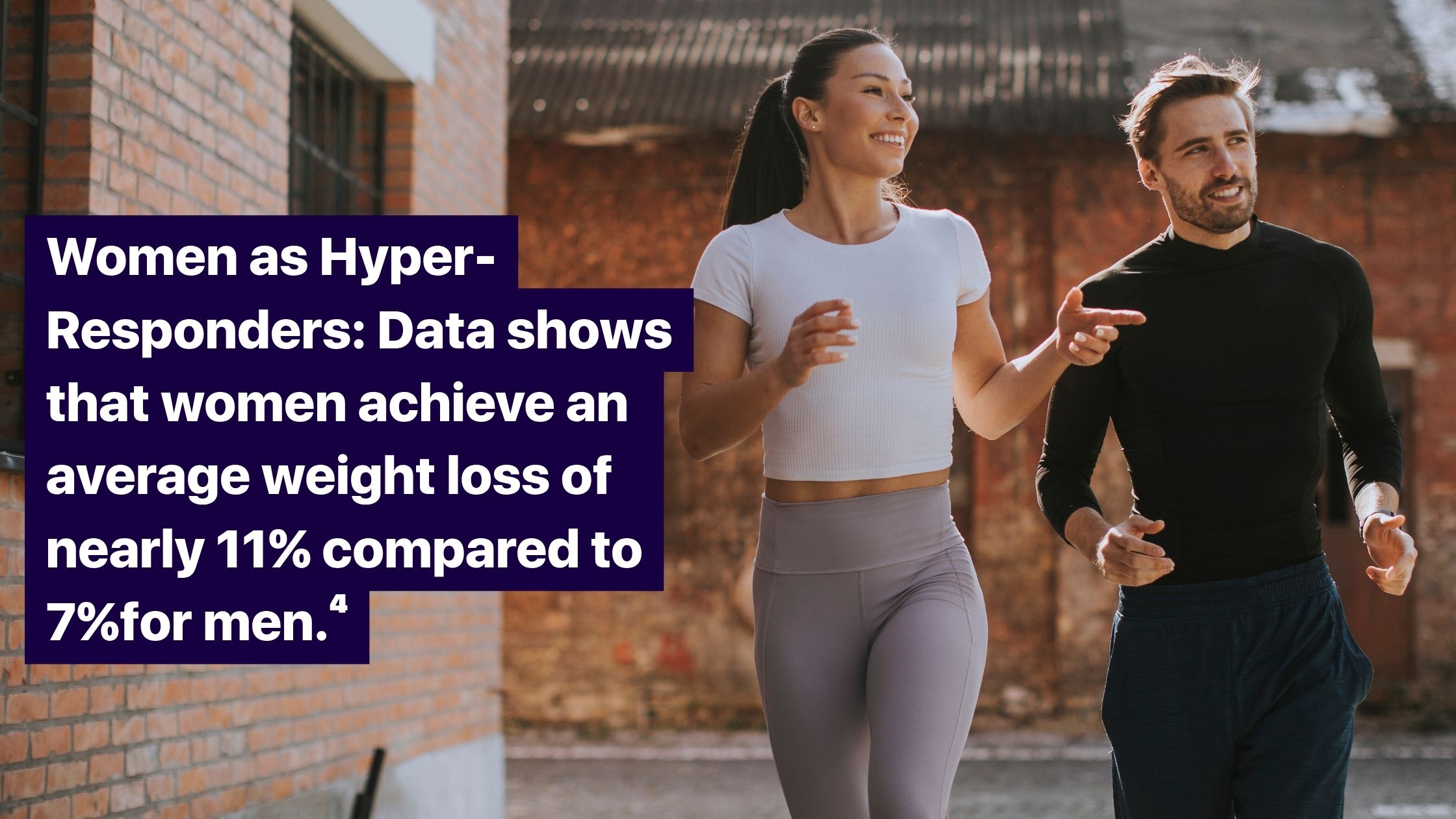
- Women as Hyper-Responders: Data shows that women achieve an average weight loss of nearly 11% compared to 7% for men.⁴
- The Estrogen Connection: Researchers suspect that synergistic interactions between GLP-1 and estrogen may enhance the drug's effectiveness in women, making them more likely to be categorized as super responders.⁵
Brand Name vs. Compounded Options
The super-responder phenomenon is seen across both brand-name and compounded medications, but the approach to treatment often differs:
- Brand Name (Wegovy, Zepbound): These use standardized, single-use pens. Super responders often find they can save money and reduce side effects by staying on a mid-level dose for many months.
- Compounded (Semaglutide/Tirzepatide): Because compounded medications are drawn from a vial into a syringe, they offer more flexibility for super responders who may be too sensitive to standard doses. Some physicians use compounded options to "micro-dose," allowing a patient to take a dose smaller than the standard 0.25mg if their weight loss is occurring too rapidly.
Disclaimer: Compounded GLP-1s are not FDA-approved. The FDA does not verify their safety or effectiveness. Always consult with a healthcare provider and ensure your medication comes from a PCAB-accredited pharmacy.
The Risks of Responding "Too Well"
Being a super responder sounds like a win, but losing weight at an extreme speed carries medical risks.
- Muscle Wasting: Rapid loss often includes a high percentage of lean muscle mass. Super responders must prioritize high protein intake and resistance training to protect their metabolism.⁶
- Nutrient Deficiencies: If the "fullness" signal is too strong, patients may struggle to eat enough calories to sustain basic organ function.
- Gallstones: Significant, rapid weight loss is a known trigger for gallbladder issues.
Whether you are a super responder or a steady loser, the goal remains the same: a healthier metabolic baseline. If you find the weight is dropping faster than 1–2 lbs per week, speak with your provider about adjusting your dose.
Ready to start your medication-supported weight loss journey?
Click here to start your GobyMeds intake and see if you qualify today!
References
- Nference & Mayo Clinic (2025). Decoding the hallmarks of GLP-1RA weight-loss super-responders: A real-world data analysis. https://www.medrxiv.org/content/10.1101/2025.11.15.25340314v1
- Cleveland Clinic (2025). Research Finds Injectable Medications for Obesity Produce Smaller Weight Loss in A Real-World Setting. https://newsroom.clevelandclinic.org/2025/06/10/cleveland-clinic-research-finds-injectable-medications-for-obesity-produce-smaller-weight-loss-in-a-real-world-setting-compared-to-randomized-clinical-trials
- Cleveland Clinic Newsroom (2025). Gene Could Impact Weight Loss Using GLP-1, Study Finds.https://newsroom.clevelandclinic.org/2025/09/23/gene-could-impact-weight-loss-using-glp-1-study-finds
- Johns Hopkins Bloomberg School of Public Health (2026). GLP-1 Weight-Loss Drugs Comparably Effective for Patients Across Age, Race, and Starting Weight. https://publichealth.jhu.edu/2026/glp-1-weight-loss-drugs-comparably-effective-for-patients-across-age-race-and-starting-weight
- JAMA Internal Medicine (2026). GLP-1 Weight-Loss Drugs Prove Effective Across Diverse Patient Groups.https://hub.jhu.edu/2026/03/03/glp-1-drugs-effective-across-demographics/
- Johns Hopkins University (2025). Sex Differences in Obesity and Its Treatment.https://pure.johnshopkins.edu/en/publications/sex-differences-in-obesity-and-its-treatment/




.svg)