
Hit a Plateau on Your GLP-1? Here's What's Actually Happening (and What to Do About It)
You stepped on the scale this morning and saw the same number you saw last week. And the week before that. After months of steady progress on your GLP-1 medication, the needle has stopped moving — and you're starting to wonder if something's wrong.
Take a breath. You're not broken, your medication isn't suddenly failing, and you haven't done anything wrong. What you're experiencing has a name: a weight loss plateau. It's one of the most common, most frustrating, and most misunderstood parts of any weight loss journey — and it happens to almost everyone on a GLP-1 eventually.
The good news? A plateau isn't a dead end. It's a signal. Once you understand what your body is telling you, you can make the small adjustments that get things moving again. Here's what's really going on, why it happens, and the practical steps that actually help.
What Is a GLP-1 Plateau, Exactly?
A weight loss plateau is a stretch of time — usually three weeks or longer — when your weight stays essentially the same despite continuing your medication and your routine. Day-to-day fluctuations of a pound or two are normal water weight, but if the trend line has truly flattened for several weeks, that's a plateau.
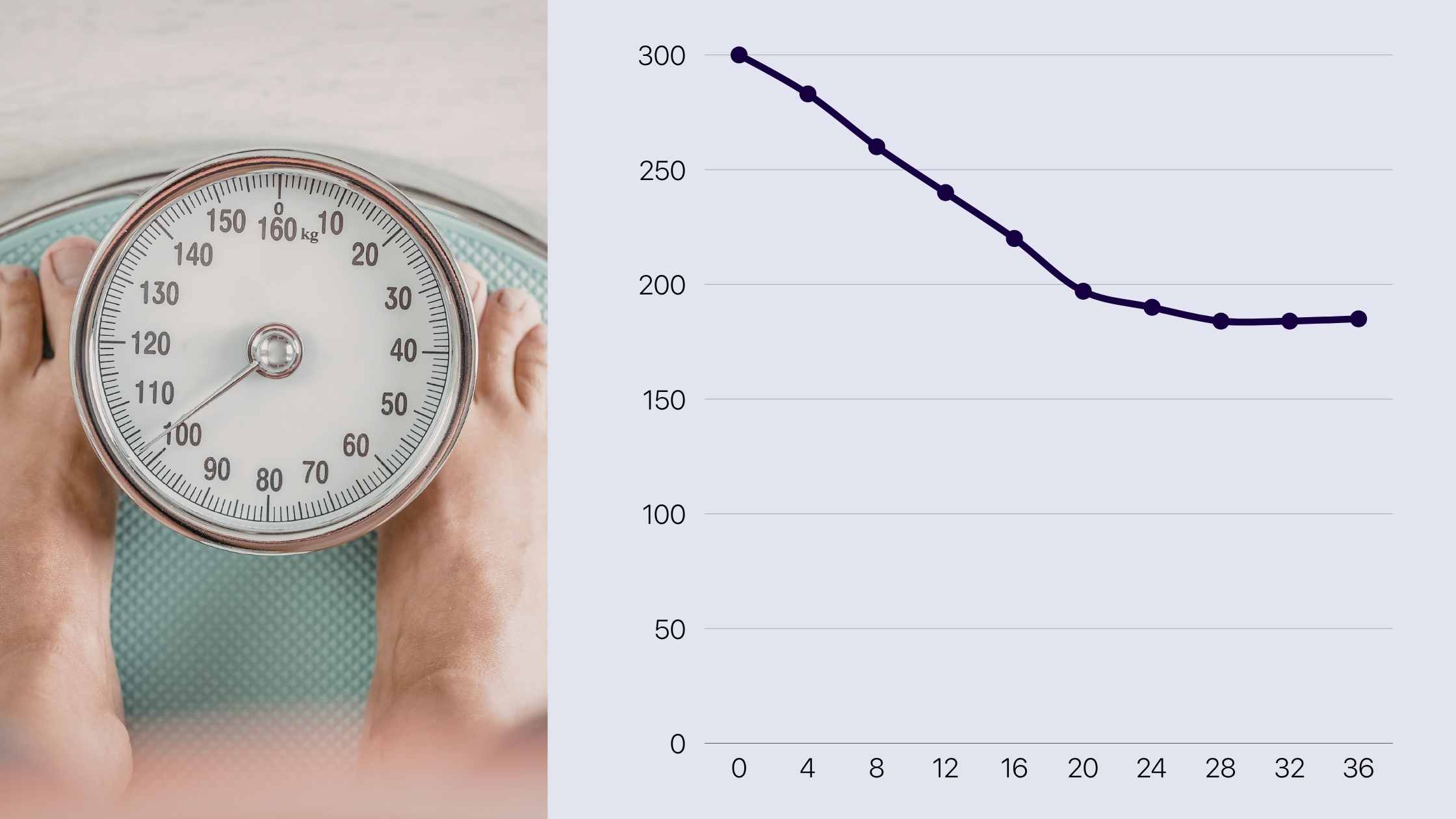
On GLP-1 medications like semaglutide and tirzepatide, plateaus tend to show up in a few predictable places. Some people hit one after the first few months as their body adjusts to the medication. Others experience it after losing a significant chunk of weight — often in the 10 to 20 percent range of their starting body weight. And many people find that as they approach what their body considers a comfortable weight, progress naturally slows down.
This isn't a flaw in the medication. It's biology doing exactly what biology does.
Why Plateaus Happen on GLP-1 Medications
Understanding the why behind a plateau makes it a lot easier to handle. There are several real reasons your weight loss might stall, and most of them have nothing to do with willpower.
1. Your Body Has Adjusted to the Medication
GLP-1 medications work by mimicking a hormone your body naturally produces. Over time, your body adapts. The appetite suppression that felt overwhelming in month one might feel more subtle in month six. You're still benefiting from the medication, but the dramatic effects have leveled out — which means your eating habits matter more than they did at the start.
2. Your Metabolism Has Slowed Down
Here's something nobody loves to hear: when you lose weight, your body burns fewer calories. A smaller body simply needs less fuel to operate. So the calorie intake that produced steady weight loss at 220 pounds may be your maintenance level at 190 pounds. This is called metabolic adaptation, and it affects everyone who loses weight, regardless of how they lose it.
3. You've Lost Muscle Along With Fat
Rapid weight loss — especially without enough protein and strength training — often includes some muscle loss. Muscle is metabolically active tissue, meaning it burns calories even when you're sitting still. Less muscle means a slower resting metabolism, which can quietly contribute to a plateau.
4. Your Dose May Need Adjusting
GLP-1 medications are typically titrated up over time, meaning you start at a low dose and gradually increase. If you've been on the same dose for a while and your weight loss has stalled, your provider may consider whether it's time to move up to the next level.
5. Life Has Crept In
Bigger portions. More snacking. Less movement than you had a few months ago. These shifts can be subtle and unintentional — but on a smaller body with adapted hormones, they add up faster than they used to.
What to Do When You Hit a GLP-1 Plateau
Now for the part you actually came here for. A plateau isn't something to power through with sheer willpower or panic-mode dieting. It's something to respond to thoughtfully. Here's what tends to actually work.
1. Take an Honest Look at Your Habits
Before changing anything else, get curious about what you're actually doing day to day. Track your food for a week — not to judge yourself, but to see the real picture. Many people are surprised to find they're eating significantly more than they thought, especially as the appetite-suppressing effects of the medication become more familiar.
Pay attention to:
- Liquid calories. Coffee drinks, smoothies, alcohol, and juice add up fast.
- Bites and tastes. A handful here, a sample there — they count.
- Portion creep. Are your servings the same size they were three months ago?
- Weekend patterns. Some people eat well Monday through Friday and undo the week on Saturday and Sunday.
This isn't about restriction. It's about awareness.
2. Prioritize Protein
If you do one thing for a stalled GLP-1 plateau, make it this. Protein helps preserve muscle (which protects your metabolism), keeps you full longer, and has a higher thermic effect than carbs or fat — meaning your body burns more calories digesting it.
Aim for protein at every meal. Most adults benefit from around 0.7 to 1 gram of protein per pound of goal body weight, but talk with your provider about what's right for you. Eggs, Greek yogurt, chicken, fish, tofu, cottage cheese, and lean beef are all easy wins.
3. Add Strength Training
Cardio is great, but strength training is what protects your muscle and keeps your metabolism humming during weight loss. You don't need a gym membership or an hour a day. Two to three short sessions a week — bodyweight squats, push-ups, resistance bands, or basic dumbbell work — make a real difference over time.
If you're new to strength training, start small and stay consistent. The goal isn't to be sore. The goal is to build the habit.
4. Move More in Daily Life
Formal workouts matter, but the calories you burn just living your life — walking, cleaning, taking the stairs, fidgeting — often add up to more than your gym time. This is called NEAT (non-exercise activity thermogenesis), and it tends to drop as people lose weight.
Look for small ways to move more: a walk after dinner, parking farther away, a phone call you take while pacing. None of it feels dramatic. All of it adds up.
5. Check Your Sleep and Stress
Sleep deprivation and chronic stress both raise cortisol, which can interfere with weight loss and ramp up cravings. If you're consistently sleeping less than seven hours or running on stress fumes, your body may be holding onto weight as a protective response. Sleep isn't a magic fix, but it's a foundational one.
6. Talk to Your Provider About Your Dose
If you've genuinely been doing the work and the plateau is persisting for several weeks or more, it may be time for a conversation with your provider about whether your dose should be adjusted. GLP-1 medications come in multiple strengths, and many people need to step up to a higher dose at some point in their journey to keep seeing progress.
Don't make this change on your own. Dosing decisions should always involve a real provider who knows your history.
7. Reframe What "Progress" Means
Sometimes the scale doesn't move because your body is doing other things — building muscle, losing inches, redistributing fat. Take measurements. Notice how your clothes fit. Pay attention to your energy, your sleep, your blood work. Weight loss is one number, but health is a whole picture.
A plateau on the scale isn't always a plateau in your progress.

When a Plateau Isn't Really a Plateau
One last thing worth saying out loud: at some point, your body is going to land where it wants to be. That might be your goal weight, or it might be a healthy weight that's different from the number in your head. If you've been losing steadily and you've now stabilized at a weight where you feel good, your labs look good, and your habits are sustainable — that's not a plateau. That's a win.
GLP-1 medications aren't designed to shrink you indefinitely. They're designed to help you reach and maintain a healthier weight. Sometimes the best move is to keep doing what you're doing and let your body settle.
How GobyMeds Helps You Through the Whole Weight Loss Journey
Plateaus are part of the process — and you shouldn't have to navigate them alone or wonder if your medication situation is going to change unexpectedly. At GobyMeds, you always know exactly what you're paying, exactly what you're getting, and exactly where it's coming from. No memberships. No hidden fees. No surprise charges if your provider adjusts your dose.
If a plateau means it's time to talk through your options, our real human support team is here — not a chatbot, not a runaround. And because we ship to all 50 states quickly, you won't be stuck waiting on your medication while you and your provider figure out next steps.
Transparent pricing, real people, and meds delivered to your door. That's the GobyMeds promise — through the fast progress, the slow stretches, and everything in between.
The Bottom Line
A plateau on a GLP-1 isn't a sign that something is broken. It's a normal, expected part of how your body responds to weight loss. The path forward isn't extreme — it's adjusting your protein, protecting your muscle, moving more in daily life, sleeping well, and having an honest conversation with your provider when the time is right.
Stay patient. Stay consistent. And remember that the goal was never just a smaller number on the scale — it was a healthier, more energetic version of you.
Ready for medication management that's as straightforward as your goals? GobyMeds makes it simple, transparent, and supported by real people. Get started on your journey today.




.svg)