
Written by: Ellie Hiller | BSN, RN, HSN Nutrition Coach
After covering protein, it’s time to talk about arguably the second most important nutrition concept for overall health: fiber.
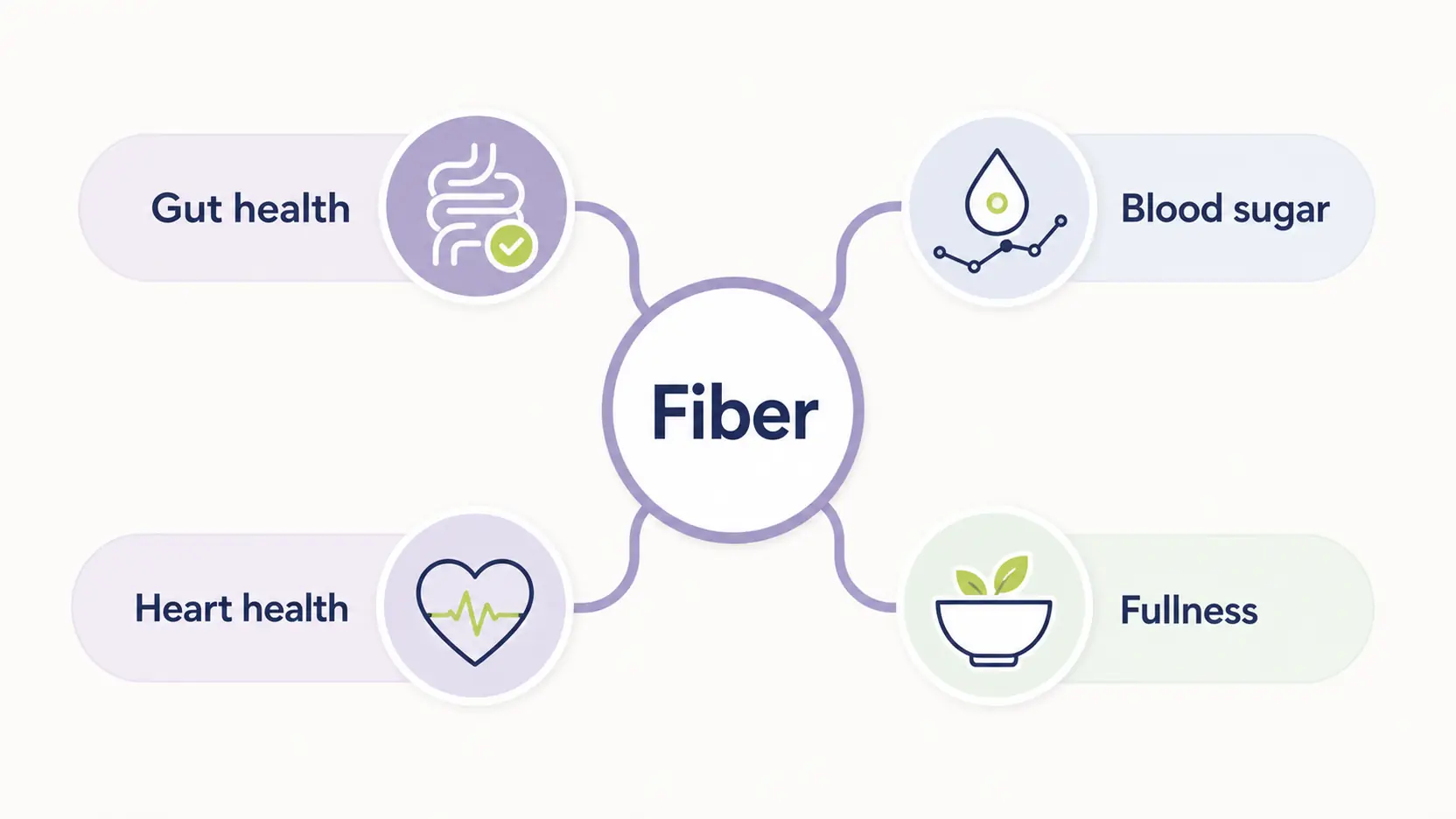
Fiber is one of those things that everyone has heard of, but most people still do not fully understand why it matters. It often gets reduced to just digestion, when in reality it reaches much further than that. Fiber plays a powerful role in gut health, blood sugar regulation, heart health, digestion, and satiety, which is part of why it deserves much more attention than it usually gets.[1][2][3]
If protein is often the nutrient people under-prioritize at meals, fiber is often the nutrient they overlook altogether.
That matters because fiber does a lot of work in the background. It supports regularity, helps meals feel more satisfying, and plays a meaningful role in metabolic and cardiovascular health. It is not flashy, but it is foundational.
What is fiber?
Fiber is a type of carbohydrate, but unlike starches and sugars, it cannot be fully digested in the small intestine because humans lack the enzymes needed to break it down for energy.[1][4]
Instead of being absorbed the way other carbohydrates are, fiber moves through the digestive system differently. That is exactly what gives it so many of its benefits.
Depending on the type, fiber can:
- Slow digestion
- Help support healthy cholesterol levels
- Improve fullness after meals
- Support healthy bowel movements
- Help with blood sugar control
- Feed beneficial gut bacteria[1][2][3][4]
At the end of the day, fiber is one of the most overlooked nutrients in modern nutrition, yet it impacts nearly every system in the body.
The two main types of fiber
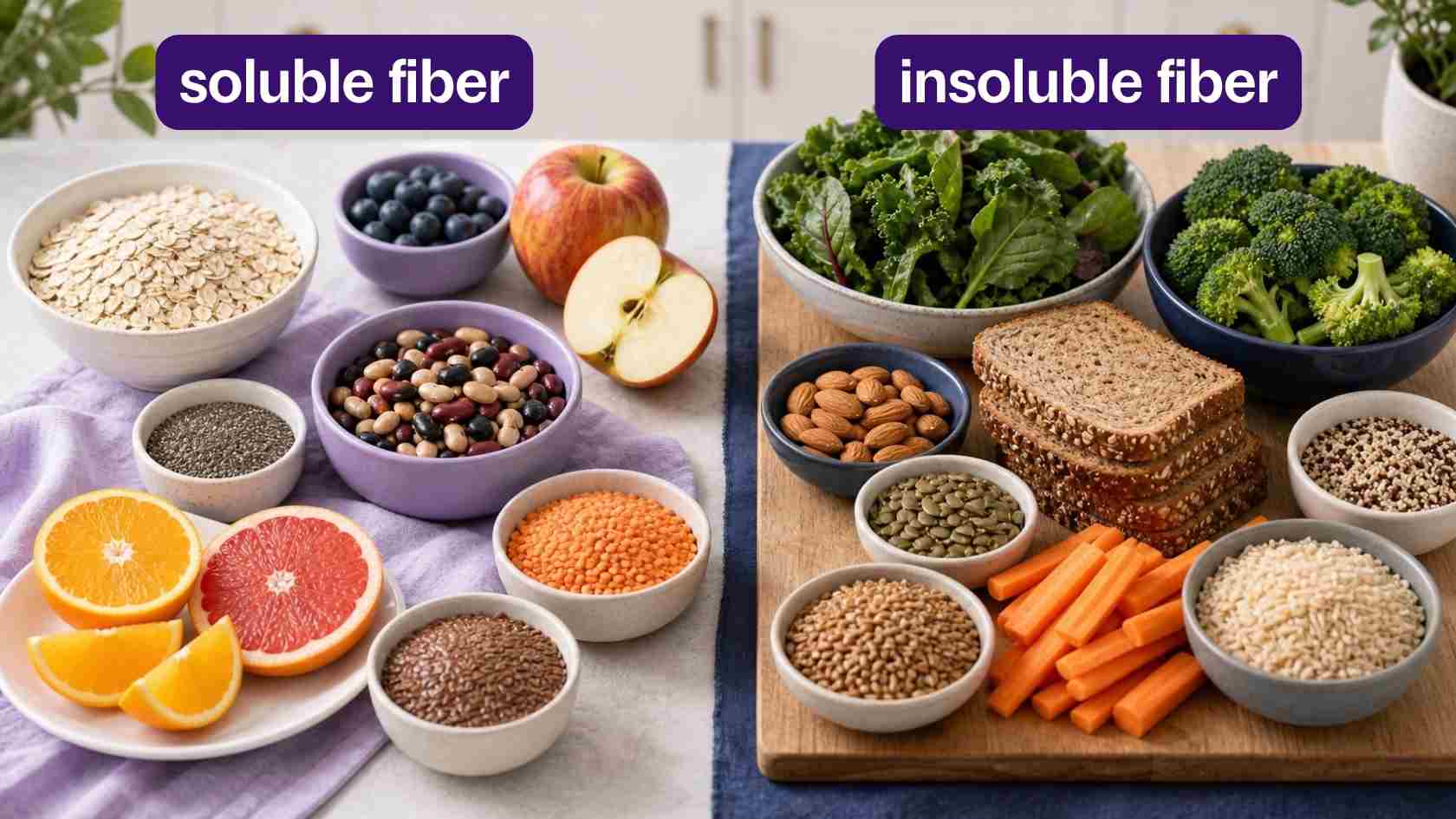
There are two main types of fiber: soluble fiber and insoluble fiber. Both matter, and both do different jobs.[1][4]
Soluble fiber
Soluble fiber dissolves in water and forms a gel-like substance during digestion.[2][4] That gel-like effect is one reason soluble fiber is so helpful for fullness, cholesterol, and blood sugar regulation.
Soluble fiber also helps support the gut microbiome. This is where the terms prebiotics and probiotics come into play. Some types of soluble fiber act as prebiotics, meaning they provide fuel for beneficial bacteria in the gut. When those bacteria ferment certain fibers, they produce compounds that support gut and overall health.[1][5]
Soluble fiber is especially known for its cardioprotective benefits. Official nutrition guidance notes that fiber can help lower cholesterol levels, and soluble fiber is often the type most closely associated with that benefit when paired with an overall healthy diet.[2][3]
It also slows digestion, which can help you stay fuller longer and support better blood sugar control by slowing how quickly carbohydrates are absorbed.[2][3]
Think about the difference between eating a spoonful of sugar versus an apple with the skin. The spoonful of sugar is rapidly absorbed and does very little for fullness, while the apple’s fiber slows digestion and gives the meal more staying power.
Common sources of soluble fiber include:
- Oats
- Beans and lentils
- Apples
- Citrus fruits
- Barley
- Nuts and seeds
- Brussels sprouts and some other vegetables[2][4]
Insoluble fiber
Insoluble fiber does not dissolve in water and passes through the digestive tract relatively intact.[4]
While it does not provide energy, it plays a major role in bowel health by adding bulk to stool, improving gut motility, and supporting regularity.[1][4][5]
Insoluble fiber also supports overall meal quality because many foods that contain it are naturally nutrient-dense foods like vegetables, fruits, legumes, nuts, seeds, and whole grains.[1][3][5]
Common sources of insoluble fiber include:
- Whole grains
- Wheat bran
- Nuts
- Beans
- Cauliflower
- Green beans
- Potatoes
- Many fruits and vegetables, especially when the skin is left on[4][5]
Together, both forms of fiber support a healthier gut, more stable energy levels, improved fullness, and better long-term metabolic health.
Why fiber matters for more than digestion
Most people first hear about fiber in the context of digestion, and that is certainly part of the story. But fiber reaches far beyond bowel regularity.
1. Fiber supports gut health
Fiber helps support a healthier digestive tract in more than one way.
Some fibers feed beneficial gut bacteria, while other fibers help move waste through the body more efficiently. That combination matters. A healthy gut is not just about avoiding discomfort. It plays a role in digestion, overall gut function, and how well the digestive system keeps moving.[1][5]
In simple terms, fiber helps create a better environment in the gut.
2. Fiber helps with blood sugar control
Fiber can also help create a steadier blood sugar response after meals.[2][3]
When a meal contains fiber, especially from whole-food carbohydrate sources, digestion tends to happen more slowly. That slows the entry of glucose into the bloodstream and can reduce sharp spikes and crashes in energy.[2][3]
This is one reason whole-food carbohydrate sources often feel so different in the body than highly processed ones. It is not just about the number of carbs. It is also about whether fiber is coming along with them.
3. Fiber supports heart health
Fiber is also associated with heart-health benefits, particularly when it comes to cholesterol.[2][3]
The CDC notes that fiber can help lower cholesterol levels, and soluble fiber in particular can help reduce the body’s absorption of some cholesterol and fat.[2][3]
This is a good reminder that nutrition is rarely about one nutrient doing one isolated job. Foods that provide fiber often bring other benefits with them too, like vitamins, minerals, and water.
4. Fiber improves satiety
Fiber helps meals feel more satisfying.
Because fiber slows digestion and adds bulk, it can help you feel fuller longer.[1][2][3] That matters whether your goal is simply to feel better between meals, reduce mindless snacking, support weight management, or avoid the constant hunt for something sweet an hour after eating.
This is one of the most practical reasons fiber matters. You can feel the difference.
Meals built around whole-food carbohydrates, produce, beans, lentils, nuts, and seeds usually have more staying power than meals built mostly from refined carbohydrates with little protein or fiber.
Why most people need to pay more attention to fiber
One of the main problems with modern eating patterns is not just that people eat too much sugar or too many ultra-processed foods. It is also that many people do not eat enough foods that naturally contain fiber in the first place.[1][2][5]
When meals are built mostly around convenience foods, fiber tends to disappear quietly.
That can look like:
- Refined grains instead of whole grains
- Juice instead of whole fruit
- Snack foods instead of beans, lentils, nuts, or produce
- Carbohydrates with very little natural structure left
Over time, low fiber intake can affect fullness, digestion, blood sugar stability, and overall diet quality.
What high-fiber eating actually looks like
The good news is that eating more fiber does not have to mean buying specialty foods or overhauling your life overnight.
Usually, it looks like getting back to more real-food-forward choices:
- Fruit instead of fruit juice
- Oatmeal instead of sugary cereal
- Whole grain bread or wraps instead of refined versions
- Beans or lentils added to meals a few times a week
- Vegetables included more consistently at lunch and dinner
- Nuts and seeds used as toppings or snacks[1][2][3][5]
Fiber tends to take care of itself when meals include more plants in their whole or minimally processed form.

Increase fiber slowly
This part matters.
If someone has been eating a relatively low-fiber diet and suddenly starts loading up on beans, raw vegetables, bran cereal, and supplements all at once, they may end up with gas, bloating, or cramping.[1][5]
That does not mean fiber is the problem. It usually means the increase happened too quickly.
The better approach is to increase fiber gradually and make sure fluid intake is adequate along the way. NIDDK specifically notes that drinking enough liquids helps fiber work better, especially when increasing intake for constipation support.[5]
So if fiber has been low, think:
- More gradual
- More consistent
- More whole foods
- More water
Not:
- Perfect overnight
Easy ways to eat more fiber
If you want to improve fiber intake without overcomplicating it, start with simple wins:
- Keep the skin on fruits like apples and pears when possible
- Choose oatmeal or whole-grain cereal more often
- Add berries, nuts, or seeds to yogurt or oats
- Add beans or lentils to soups, salads, tacos, or bowls
- Build lunches and dinners around a vegetable plus a whole-food carb source
- Swap more refined snacks for fruit, nuts, or vegetables with a dip[1][2][3][5]
You do not need to hit perfection. You just need to make fiber-containing foods more normal in your daily routine.
The bigger picture
Fiber matters because it does a little bit of everything well.
It supports digestion. It supports gut health. It helps with fullness. It improves the quality of carbohydrate intake. It supports blood sugar stability and heart health. And unlike many health trends, fiber is not complicated. It is one of the simplest ways to make an eating pattern more supportive of long-term health.[1][2][3]
That is why it deserves much more attention than it gets.
The Bottom Line
After protein, fiber is one of the most important nutrition concepts to understand for overall health. It is not just about digestion. Fiber supports gut health, blood sugar regulation, heart health, fullness, and long-term metabolic health.
If you want to make your nutrition more effective without making it more extreme, increasing fiber is one of the best places to start. Focus on more real-food sources like fruits, vegetables, whole grains, legumes, nuts, and seeds, and build gradually from there.
If you are here, you are already taking a big step towards a healthier you - researching and implementing healthy habits. Ready to see if GobyMeds could support you on your wellness journey? Click here to see if GobyMeds is a good fit for you today!
FAQ
Why is fiber important?
Fiber is important because it supports digestion, gut health, fullness, blood sugar control, and heart health. It is one of the most foundational nutrients for overall dietary quality.[1][2][3]
What is the difference between soluble and insoluble fiber?
Soluble fiber dissolves in water and can help with fullness, cholesterol, and blood sugar regulation. Insoluble fiber does not dissolve in water and is especially helpful for adding stool bulk and supporting regular bowel movements.[2][4][5]
Can fiber help with constipation?
Yes. Fiber can help support regularity and prevent or relieve constipation, especially when it is increased gradually and paired with enough fluids.[1][4][5]
Does fiber help you feel full?
Yes. Fiber adds bulk and slows digestion, which can help meals feel more satisfying and keep you fuller longer.[1][2][3]
What foods are high in fiber?
Good fiber sources include fruits, vegetables, whole grains, beans, lentils, nuts, and seeds.[1][2][5]
Footnotes
[1] MedlinePlus. “Dietary Fiber.” https://medlineplus.gov/dietaryfiber.html
[2] Centers for Disease Control and Prevention. “Fiber: The Carb That Helps You Manage Diabetes.” May 15, 2024. https://www.cdc.gov/diabetes/healthy-eating/fiber-helps-diabetes.html
[3] Centers for Disease Control and Prevention. “Healthy Eating Tips.” March 2, 2026. https://www.cdc.gov/nutrition/features/healthy-eating-tips.html
[4] MedlinePlus Medical Encyclopedia. “Fiber.” https://medlineplus.gov/ency/article/002470.htm
[5] National Institute of Diabetes and Digestive and Kidney Diseases. “Eating, Diet, & Nutrition for Constipation.” https://www.niddk.nih.gov/health-information/digestive-diseases/constipation/eating-diet-nutrition
Disclaimer
This article is not medical advice and is intended for general nutrition information only. For a specific diet plan, individuals should seek the assistance of a registered dietitian or licensed healthcare professional.




.svg)