
How to Travel With a Refrigerated GLP-1
A practical guide for compounded semaglutide or tirzepatide that needs to stay cold.
Traveling with a GLP-1 does not have to be stressful, but it does require a little planning.
If you use compounded semaglutide or compounded tirzepatide, the most important rule is simple: follow your pharmacy label first. Compounded medications are not FDA-approved and may come in different containers, concentrations, and storage instructions than brand-name products. That means the safest travel plan is the one that matches the instructions that came with your medication.
That said, official storage guidance for FDA-approved semaglutide and tirzepatide products, along with CDC, TSA, and FDA travel and storage guidance, gives us a useful framework for traveling safely with refrigerated GLP-1s.
Why Temperature Matters
Heat, freezing, and long periods outside the recommended storage range can affect medication quality.
FDA has specifically warned that improper storage during shipping can cause quality problems with injectable GLP-1 drugs. The agency recommends not using an injectable GLP-1 that arrives warm or inadequately refrigerated during shipping, because this can affect the drug’s quality.
That does not mean every travel situation follows the same rule. It does mean temperature protection matters, and it is worth taking seriously.
A good travel plan is not just about convenience. It is about protecting the medication you paid for and rely on.
Start With the Label, Not Social Media
Before you pack, check these four things on your medication label or pharmacy instructions:
- Whether it must stay refrigerated at all times
- Whether it can be kept at room temperature for any limited period
- Whether it can go back into the refrigerator after being at room temperature
- Whether your medication is in a vial, prefilled syringe, or pen
This matters because not all semaglutide and tirzepatide products have the same storage rules, and compounded medications may have stricter instructions than brand-name products.
Brand-name examples can be helpful for general context, but they do not automatically apply to compounded semaglutide or tirzepatide. If your pharmacy gives stricter instructions, use the stricter rule.
The Safest Way to Pack It
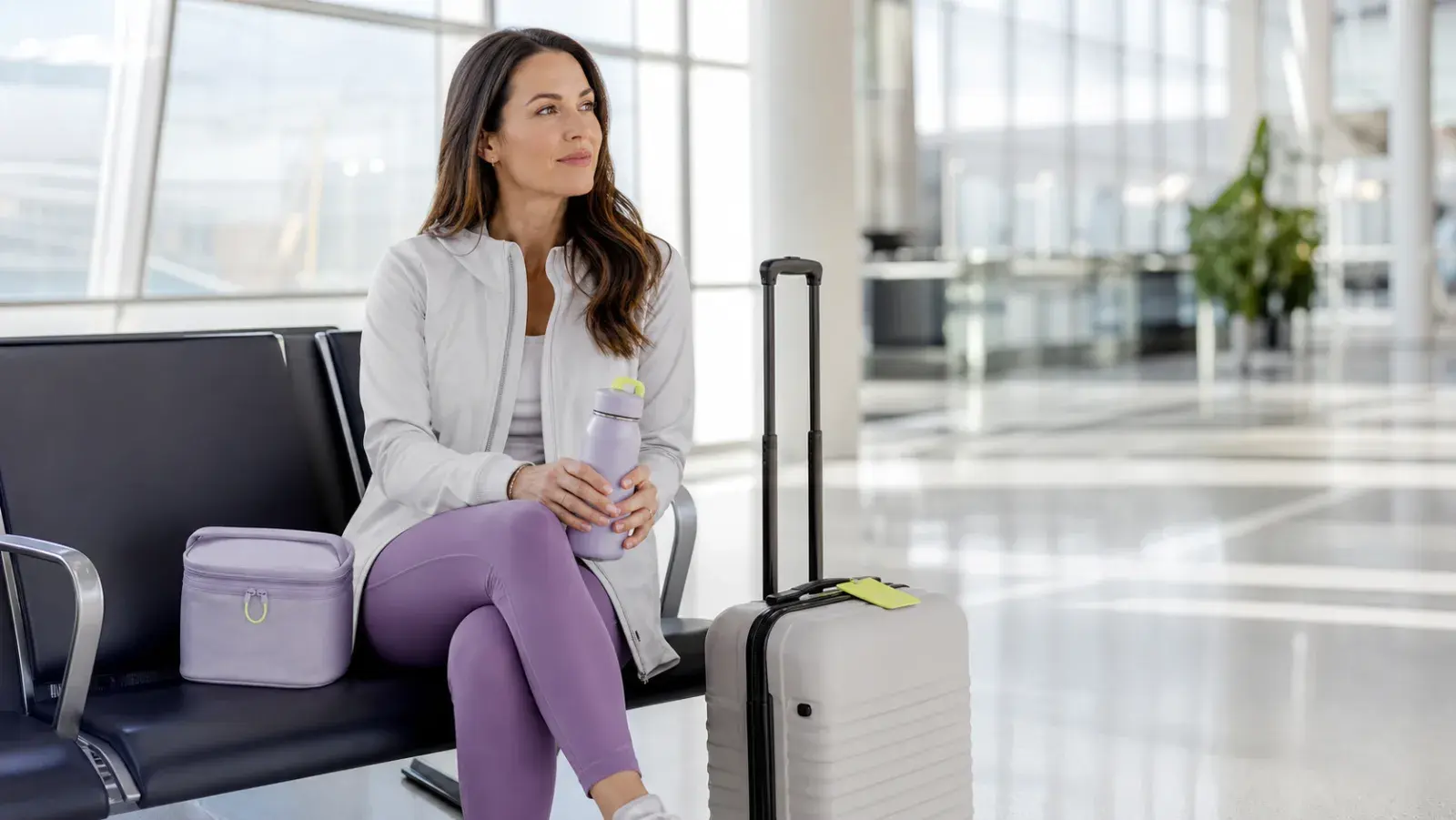
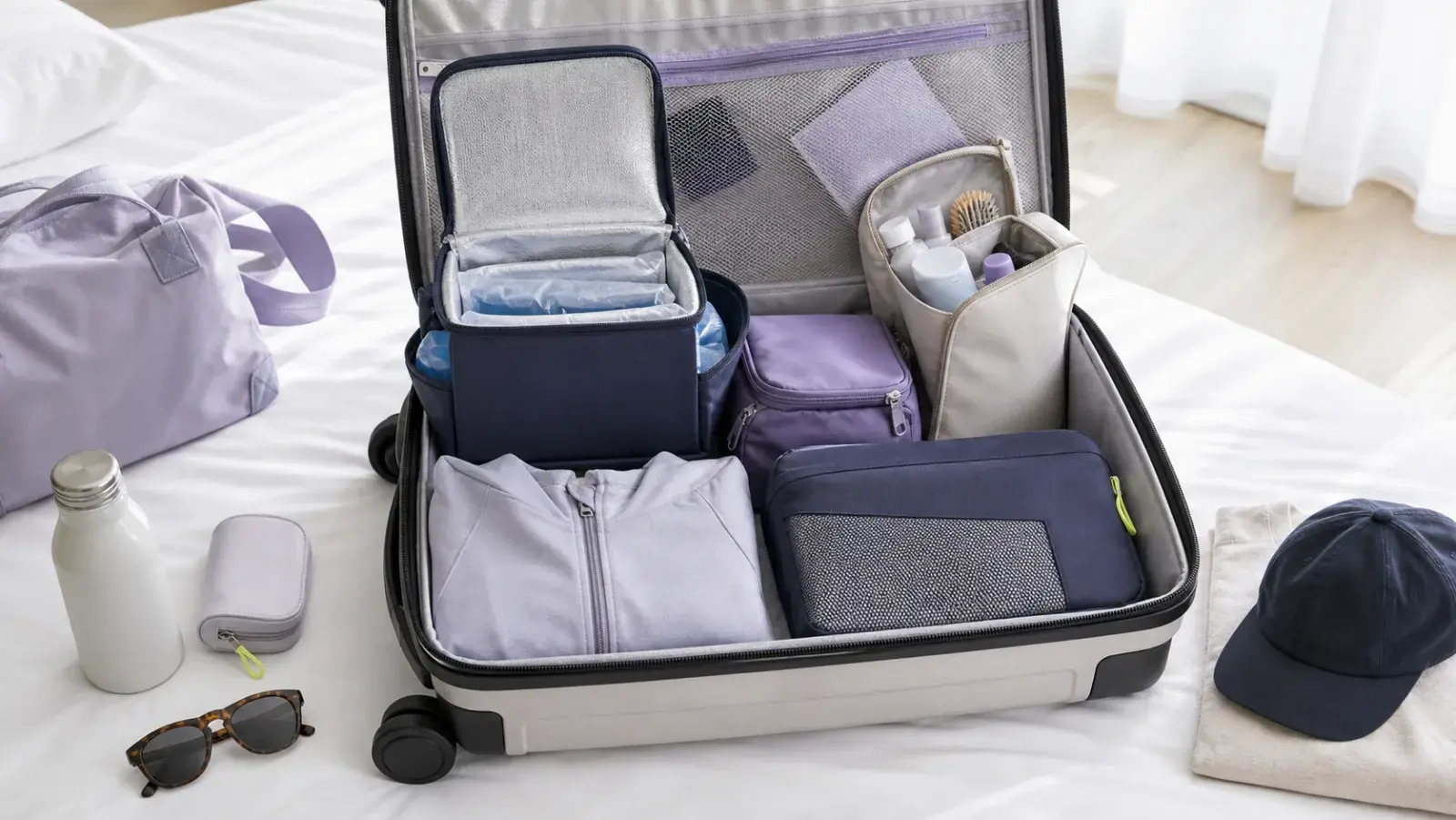
For most travelers, the safest approach is to keep the medication in an insulated medication bag or small cooler with cold packs and store it in your carry-on, not checked luggage.
That advice is consistent with CDC and TSA guidance:
- CDC recommends packing medicines in your carry-on in case luggage is delayed or lost
- CDC advises travelers to bring enough medicine for the trip, plus extra in case of delays
- CDC also advises against keeping temperature-sensitive medicines in a hot car, in direct sunlight, or directly on ice
- TSA allows medically necessary liquids and cooling accessories in carry-on bags
A practical packing setup looks like this:
- Keep the medication in its original carton when possible
- Use frozen gel packs or freezer packs
- Keep the medication cool, but not pressed directly against ice or a freezing surface
- Pack more supplies than you think you will need if delays are possible
- If you travel with needles or syringes, pack a travel-size sharps container
That “not directly on ice” point matters. CDC advises against putting temperature-sensitive medicines directly on ice, and official GLP-1 product instructions say not to freeze the medication.
Flying With a GLP-1
If you are flying, bring your medication and supplies in your carry-on.
TSA says:
- Medications in liquid or other forms are allowed
- Medically necessary liquids can exceed the usual 3.4-ounce limit
- Ice packs and gel packs used to keep medication cold are allowed
- Cooling packs may get additional screening if they are partially melted or slushy
- Liquid medications and cooling supplies should be declared at the checkpoint
It can also help to keep everything together in one pouch so security screening goes more smoothly.
If you are anxious about bringing refrigerated medication through security, TSA’s guidance is on your side. The key is to stay organized and allow a little extra time.
Road Trips and Long Car Rides
Cars can heat up fast, even when the weather does not seem extreme.
If you are driving, do not leave your GLP-1 in the glove box, trunk, or parked car for long periods. Keep it in an insulated cooler with cold packs and bring it with you when you stop.
A few practical rules help:
- Do not leave it in a hot car
- Do not leave it in direct sunlight
- Do not place it directly on ice
- Do not let it freeze
- Check the cooler periodically on longer travel days
For overnight stays, move the medication to a refrigerator if your label says it should stay refrigerated.
Hotel and Destination Tips
Once you arrive, check your storage setup right away.
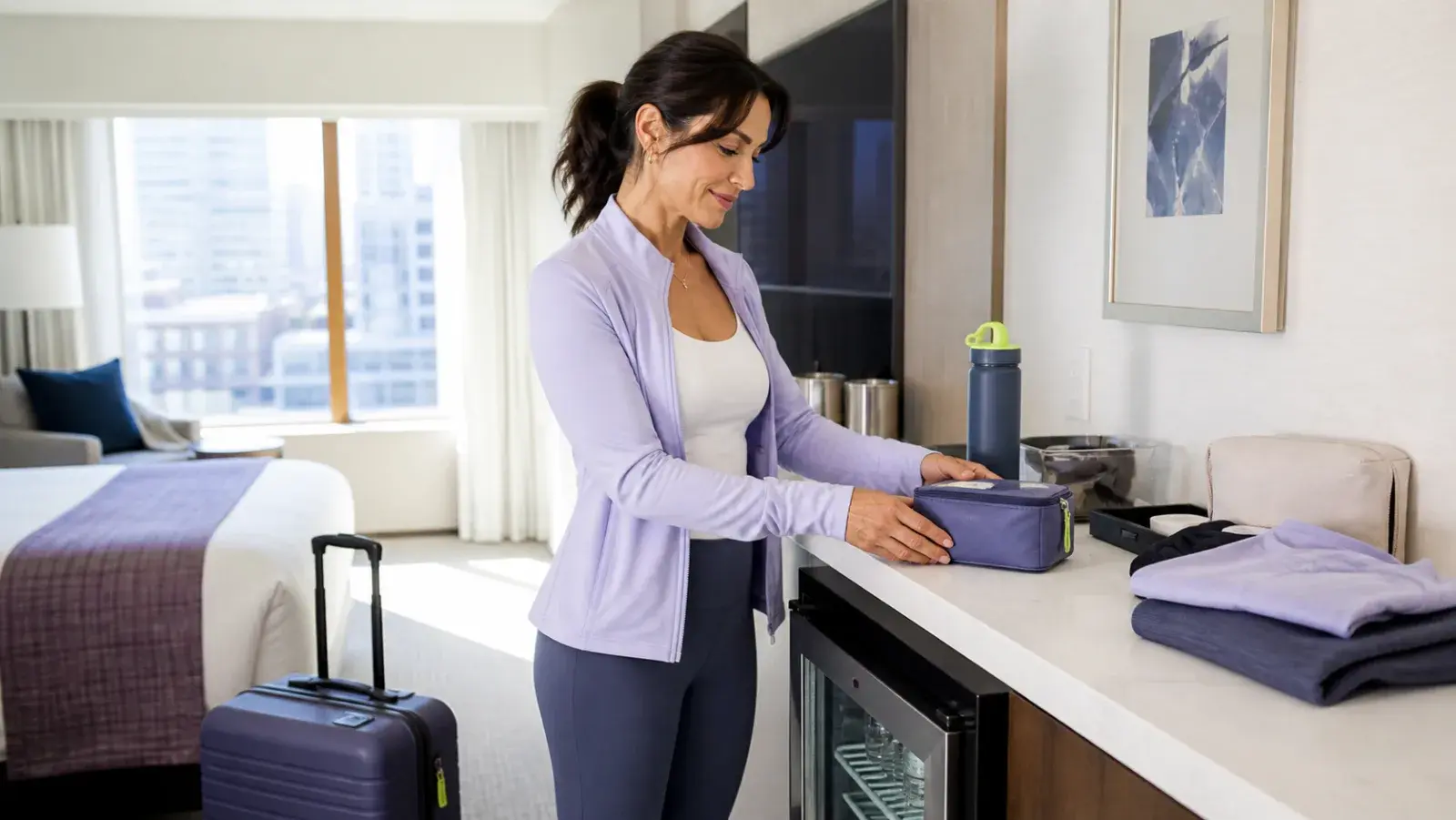
If your hotel room has a mini-fridge, make sure it is actually cold enough and not accidentally freezing items in the back. If it feels unreliable, keep your medication in your insulated bag with fresh cold packs until you can store it properly.
A few smart habits:
- Put the medication somewhere visible so you do not forget it
- Keep it away from the freezer compartment
- Avoid placing it against the coldest back wall if the fridge tends to freeze items
- Re-freeze gel packs if you will need them for the trip home
If you are staying somewhere without a refrigerator, follow your pharmacy’s room-temperature guidance exactly. If you are not sure, ask before your trip.
What If You Accidentally Leave It Out?
This is where the label matters most.
Some GLP-1 products can be kept at room temperature for a limited time, but the allowed time varies by product and presentation. Compounded medications may have different or stricter instructions.
If you accidentally leave your medication out:
- Check how long it was out
- Check the temperature conditions
- Read your pharmacy label
- Contact your pharmacy or provider if you are unsure
- Do not guess if the medication is still okay to use
If your medication got hot, froze, or was stored outside its instructed range for too long, do not assume it is fine.
Bring Extra Supplies
It is not just the medication that matters. Bring the supplies you would need if your trip runs long.
That may include:
- Extra syringes or needles if applicable
- Alcohol prep pads
- A sharps container or travel sharps option
- Extra cold packs
- Your prescription information
- Pharmacy contact information
- Provider contact information
Travel is smoother when you assume delays are possible.
A Simple Travel Checklist
Before you leave, make sure you have:
- Your medication
- Original carton or labeled container
- Insulated medication bag or cooler
- Frozen gel packs
- Injection supplies if needed
- Travel-size sharps container
- Backup cold packs
- Pharmacy instructions
- Enough medication for the full trip plus extra if possible
The Bottom Line
Traveling with a refrigerated GLP-1 takes a little planning, but it is absolutely doable.
The safest approach is to follow your pharmacy label first, keep your medication in your carry-on, protect it from heat and freezing, and use an insulated cooler with cold packs.
Brand-name storage guidance can offer useful context, but compounded semaglutide and compounded tirzepatide may have different instructions. When there is any conflict, follow the pharmacy label that came with your medication.
If you are ever unsure whether your medication stayed within the right temperature range, ask before using it.
Sources
- FDA: Concerns With Unapproved GLP-1 Drugs Used for Weight Loss
https://www.fda.gov/drugs/drug-alerts-and-statements/fdas-concerns-unapproved-glp-1-drugs-used-weight-loss - TSA: Travel Tips for Medications and Cooling Supplies
https://www.tsa.gov/news/press/factsheets/tsa-travel-tips - CDC: Traveling Abroad With Medicine
https://wwwnc.cdc.gov/travel/page/travel-abroad-with-medicine - CDC: Tips for Traveling With Temperature-Sensitive Medicines
https://www.cdc.gov/diabetes/about/tips-for-traveling-with-diabetes.html - DailyMed: Zepbound Prescribing Information
https://dailymed.nlm.nih.gov/dailymed/lookup.cfm?setid=487cd7e7-434c-4925-99fa-aa80b1cc776b&version=38
Disclaimer: This article is for informational purposes only and does not constitute medical advice. Compounded semaglutide and compounded tirzepatide are not FDA-approved. Always follow the storage instructions from your pharmacy and the guidance of your licensed healthcare provider.




.svg)