

Nutrition Tips for Navigating the Holidays
By Ellie Hiller, BSN, RN, HSN Nutrition Coach
One of the most anticipated parts of the holiday season is all the amazing fellowship over an incredible meal. It can seem impossible to have health goals while navigating the holiday season, but that does not have to be the case.
You can enjoy the people, the food, and the traditions without feeling like you have to choose between being "all in" or "starting over" in January. A few practical habits can help you enjoy the season while still feeling grounded in your routine.
Here are a few ways to do that.
Utilize the 90/10 Rule
Keep things as normal as you can 90% of the time.
Try to avoid "saving all your calories" for the big holiday meal by skipping breakfast or lunch. That can leave you under-fueled, low on protein, and more likely to arrive at the meal overly hungry. Going into a meal starving can make it much harder to listen to your body's hunger and fullness cues.
Instead, think of the holiday meal as one part of the day, not the whole day. Eat a balanced breakfast. Have a protein-forward lunch if the gathering is later. Drink water. Move your body if that is part of your normal routine.
The goal is not to be perfect. The goal is to avoid swinging from restriction to overeating and back again.
Order Is Important: Start With Protein and Veggies
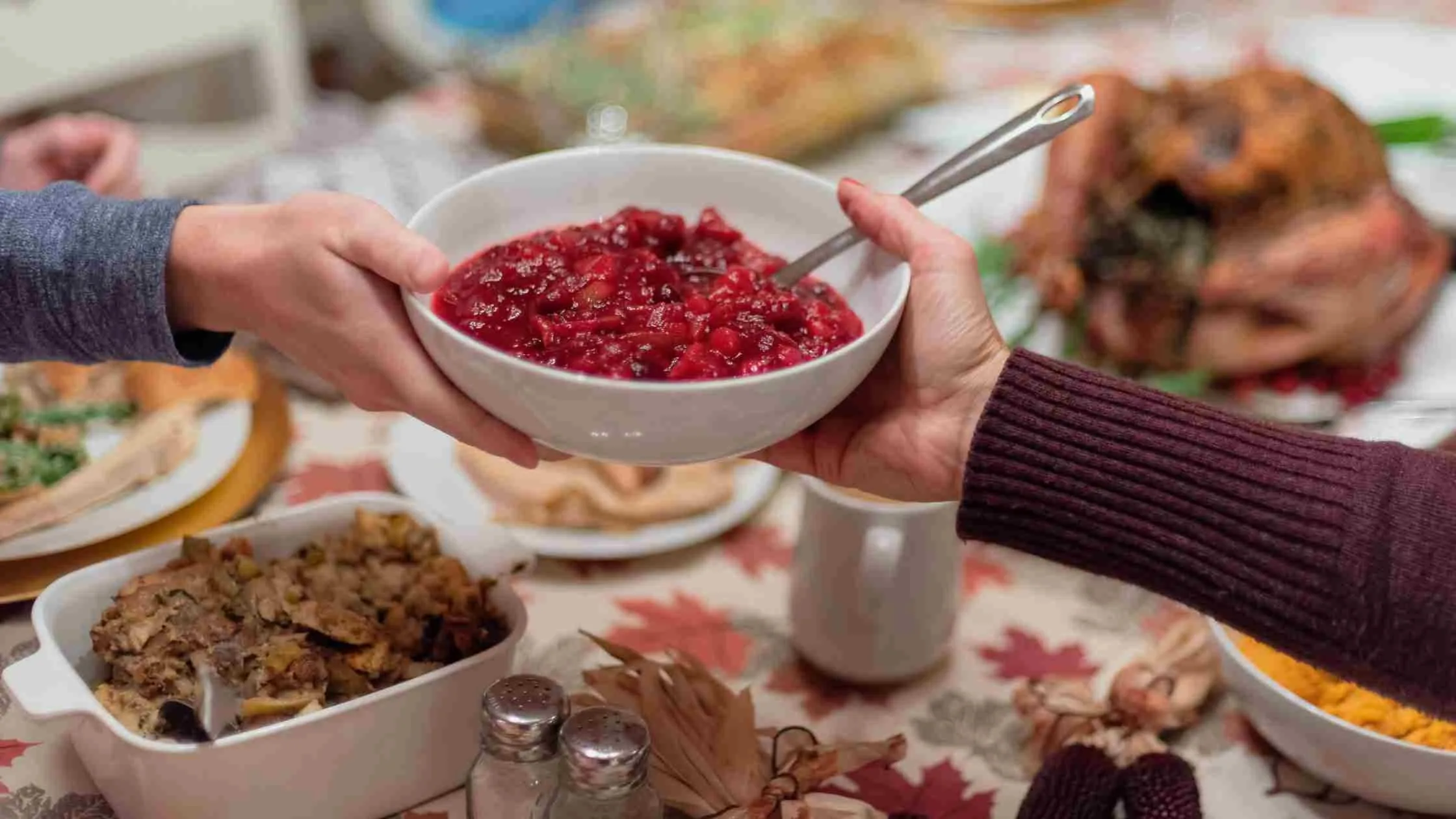
At holiday meals, look for a protein source and add some fruits or vegetables to your plate alongside the foods you really want to enjoy.
Eat the protein and veggies first to help create a more satisfying meal. Protein and fiber-rich foods can support fullness, which may make it easier to slow down, enjoy your food, and avoid feeling uncomfortably stuffed later.
This does not mean skipping the foods you look forward to. It means building a plate that gives your body what it needs while still leaving room for the foods that make the holiday feel special.
For example, your plate might include turkey, ham, chicken, eggs, beans, or another protein source, plus roasted vegetables, salad, fruit, or a vegetable side. Then add the stuffing, casserole, rolls, dessert, or traditional dish you genuinely want.
That kind of plate is more realistic than trying to avoid every holiday food, and it is usually more satisfying too.
Choose Your Splurges Strategically
I have heard it said before: "Pick your worth-it indulgence."
This means choosing the splurge that you truly look forward to every year. For example, that might be your aunt's pumpkin pie that is only available at this holiday gathering.
Fill up on protein and veggies first, then get a moderate-size piece of pie to slowly enjoy. Pick the foods you genuinely love and enjoy them. A few intentional bites of your favorite pie can be much more satisfying than mindlessly sampling everything.
It can also help to pause before you add something to your plate and ask:
- Do I actually want this?
- Is this something I can have any time, or is it special to this holiday?
- Will I enjoy this more now, or would I rather take some home for later?
Those questions are not about guilt. They are about paying attention.
Don't Let One Meal Bleed Into the Entire Week or Month
Very rarely is it a few holiday meals that make someone gain weight or lose momentum. The bigger issue is often the amount of time it takes people to get back into their normal routine.
If you know you have a big family meal on Saturday, do your best to have a plan in place for Sunday or Monday. That may mean having groceries ready, produce washed and chopped, and one or two lean protein sources prepped.
Preparing ahead can make all the difference.
You do not have to "make up for" the holiday meal. You just have to return to the basics. A normal breakfast, a walk, a protein-forward lunch, and a reasonable dinner can help you feel like yourself again quickly.
Do Not Neglect the Basics
The holiday season is one of the most important times to protect the simple habits that keep you feeling good.
You may be surprised by how much you can move the needle by aiming for:
- A daily walk or regular movement
- Protein at each meal
- Fruits and vegetables most days
- Enough water for your body, activity level, and environment
- Seven or more hours of sleep when possible
- A normal routine after holiday meals
You do not need to be perfect during the holidays, but it helps to have a solid, consistent routine most of the time so you have margin for the meals, traditions, and memories you care about.
From the GobyMeds Team: Make the Holidays Feel Less All-or-Nothing
Holiday eating can become stressful when every choice feels like it has to be either "healthy" or "bad." In real life, most people do better with a flexible plan than with strict rules.
A flexible plan gives you structure without taking away the joy of the season. It may look like eating normally before the party, filling your first plate with protein and produce, choosing the dessert you actually love, and then moving on with your life.
That approach matters because restriction often backfires. Skipping meals to compensate for a holiday dinner can leave you overly hungry, distracted around food, and more likely to eat past comfort. On the other hand, eating balanced meals earlier in the day can help you show up calmer and more in control.
Mindful eating can also be useful during the holidays. That does not mean eating slowly in a forced or awkward way. It simply means noticing what you are eating, how it tastes, and when your body is starting to feel satisfied. Harvard's Nutrition Source describes mindful eating as paying attention to the eating experience without judgment, which can be especially helpful in food-heavy social settings.
Movement can help too, but it does not need to be dramatic. A walk before or after a holiday meal can support digestion, lower stress, and help you stay connected to your routine. The CDC notes that physical activity can support better sleep, mood, cardiovascular health, and overall function. During a busy season, even small amounts of movement are worth counting.
Hydration and sleep are also easy to underestimate. Water needs vary based on body size, diet, sweat, activity, and climate, so there is no single perfect amount for everyone. A practical goal is to drink regularly, pay attention to thirst, and increase fluids when you are more active, traveling, sweating, or drinking alcohol. Sleep is similar: a perfect night will not always happen during the holidays, but most adults generally need at least seven hours for overall health.
Finally, remember that health is built by patterns, not by one plate. A holiday meal does not erase your progress. One dessert does not define your nutrition. One skipped workout does not mean you failed. What matters most is how quickly and kindly you return to the habits that support you.

The Bottom Line
You can enjoy holiday meals and still care about your health. Keep your routine steady most of the time, avoid showing up starving, build a satisfying plate, choose the foods that are actually worth it to you, and return to your normal habits after the celebration.
The holidays do not require perfection. They require a plan that is realistic enough to live with.
Sources:
- Dietary Guidelines for Americans, 2020-2025: supports a nutrient-dense eating pattern that includes vegetables, fruits, whole grains, protein foods, and appropriate calorie balance. https://www.dietaryguidelines.gov/resources/2020-2025-dietary-guidelines-online-materials
Harvard T.H. Chan School of Public Health, The Nutrition Source: mindful eating overview and practical applications. https://nutritionsource.hsph.harvard.edu/mindful-eating/ - American Heart Association: holiday eating guidance focused on moderation, balanced choices, and not putting healthy habits on hold. https://www.heart.org/-/media/aha/h4gm/pdf-files/hheatingguidefinalnohablogo.pdf
- CDC: physical activity benefits, including better sleep, function, mood, and cardiometabolic health. https://www.cdc.gov/physical-activity-basics/benefits/index.html
- CDC: adult sleep guidance noting most adults need at least seven hours of sleep per night. https://www.cdc.gov/sleep/about/index.html
National Academies Press: Dietary Reference Intakes for Water, Potassium, Sodium, Chloride, and Sulfate; useful for noting that hydration needs vary by individual and environment. https://www.nationalacademies.org/read/10925/chapter/6 - PubMed review on protein distribution and per-meal protein intake: useful context for the 20-40 gram protein-per-meal suggestion, especially when discussing muscle and satiety goals. https://pubmed.ncbi.nlm.nih.gov/29497353/