
Oral Enclomiphene: What Men Should Know About This Testosterone Support Option
For men with low testosterone, the conversation usually starts the same way: symptoms that feel off, a lab that confirms something is wrong, and a question about what to do next.
But not every low-testosterone treatment works the same way.
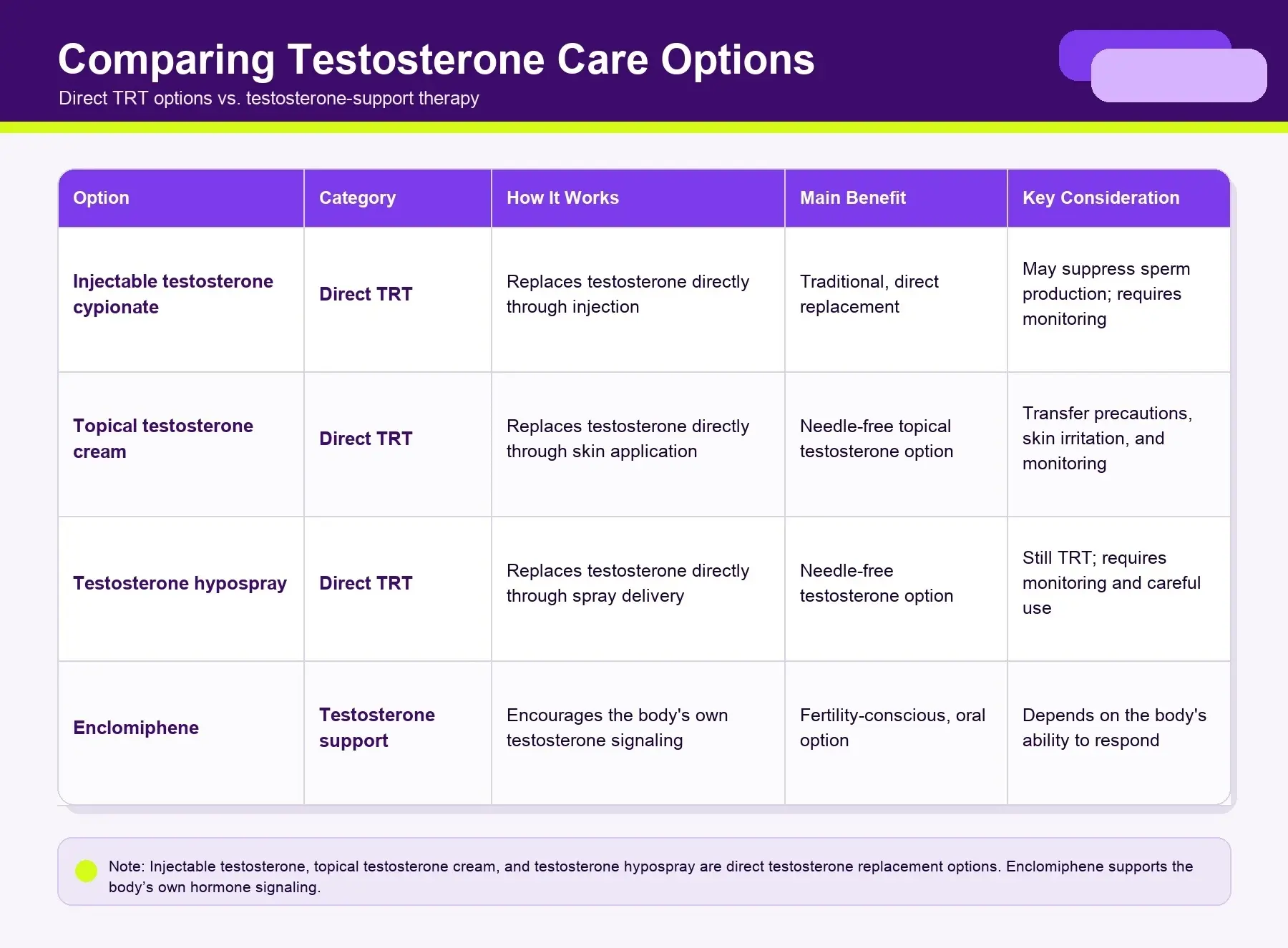
At GobyMeds, men exploring testosterone care will find several options, including injectable testosterone, topical testosterone cream, and testosterone hypospray. All three are forms of direct testosterone replacement — they supply testosterone from outside the body.
Oral enclomiphene is different.
Enclomiphene does not replace testosterone. It works with the body's own hormone signaling to encourage the body to produce more testosterone on its own. That distinction is not a small detail. It changes who enclomiphene is right for, what it does to sperm, and what treatment looks like month to month.
This article covers what enclomiphene is, how it works, who may be a good candidate, and how it compares to direct testosterone replacement.

What Is Oral Enclomiphene?
Enclomiphene is a selective estrogen receptor modulator, or SERM. It is taken orally — one capsule, once daily — and works by blocking estrogen receptors in the hypothalamus. That signal prompts the brain to release more gonadotropin-releasing hormone (GnRH), which tells the pituitary to release more luteinizing hormone (LH) and follicle-stimulating hormone (FSH), which in turn signals the testes to produce more testosterone.[1]
In plain terms: enclomiphene is not adding testosterone from the outside. It is telling the body's own system to turn up its production.
That is why it is best understood as a testosterone support option rather than testosterone replacement therapy.
Enclomiphene is a purified isomer of clomiphene (Clomid), a drug with a long history in reproductive medicine. Unlike clomiphene, enclomiphene does not contain zuclomiphene, the component associated with many of clomiphene's more pronounced side effects. Enclomiphene is available through licensed compounding pharmacies with a prescription.
How Enclomiphene Differs from Direct Testosterone Replacement
This is the most important thing to understand before exploring enclomiphene.
Injectable testosterone, topical cream, and hypospray are all direct testosterone replacement — exogenous testosterone that enters the body from the outside. They raise testosterone reliably and are often the most straightforward path for men with clear, confirmed testosterone deficiency.
But direct replacement comes with a trade-off: when the body receives testosterone from an outside source, the brain senses it and dials back its own signaling. LH and FSH drop. The testes receive less stimulation. Sperm production can fall significantly — in some cases, to near zero — and some men also experience testicular atrophy over time.
Enclomiphene does the opposite.
Instead of replacing testosterone and suppressing the axis, enclomiphene stimulates the axis. LH and FSH go up. The testes are more active, not less. And because sperm production depends on the same FSH signal, enclomiphene tends to preserve — and in many cases improve — sperm counts.
A landmark clinical trial published in Fertility and Sterility found that while both enclomiphene and topical testosterone restored testosterone levels into the normal range, the effects on sperm were dramatically different. Men on enclomiphene had sperm concentrations ranging from 75 to 334 million/mL. At three months, none of the men on topical testosterone gel had sperm counts above 20 million/mL.[2]
That difference matters enormously for the right patient.
Symptoms That May Lead Someone to Explore Enclomiphene
Low testosterone can show up in many ways. Some men notice changes in sexual health first. Others feel it as lower energy, mood shifts, or a harder time holding on to muscle.
Common symptoms that may lead someone to check testosterone levels include:
- Low libido
- Fewer or weaker morning erections
- Fatigue or low energy
- Reduced motivation
- Depressed mood or irritability
- Brain fog
- Trouble concentrating
- Loss of muscle mass or strength
- Increased body fat
- Poor workout recovery
- Lower endurance
- Sleep changes
These symptoms do not automatically point to testosterone deficiency. Stress, poor sleep, sleep apnea, thyroid issues, depression, medication side effects, and metabolic health can all cause similar patterns.
That is why labs always come before treatment.
Why Labs Matter Before Starting Enclomiphene
Enclomiphene works best for men with secondary hypogonadism — meaning the testes are capable of producing testosterone but are not receiving the right signal from the brain and pituitary. This is distinct from primary hypogonadism, where the testes themselves are not functioning properly. In primary hypogonadism, stimulating the axis will not be as effective because the problem is in the testes, not the signaling.
A responsible evaluation may include:
- Total testosterone
- Free testosterone, when appropriate
- LH and FSH
- Hematocrit and hemoglobin
- Metabolic markers
- Medical history review
- Medication review
- Fertility goals
- Symptom review
At GobyMeds, the prescribed dose is based on the individual patient's biometrics, lab results, medical history, and provider review.
Who Enclomiphene May Be For
Enclomiphene may be a good fit for men who:
- Have symptoms consistent with low testosterone
- Have lab results supporting secondary hypogonadism
- Want to support their body's own testosterone production rather than replace it
- Are currently trying to conceive or want to preserve fertility
- Are younger men (often under 35) who prefer a non-replacement approach first
- Want to avoid testicular atrophy associated with direct TRT
- Prefer a simple daily oral option
- Are not candidates for direct TRT due to fertility concerns
The fertility angle is where enclomiphene stands apart. For men who are actively trying to have children, or plan to in the near future, it changes the conversation entirely. Direct TRT may suppress sperm production in ways that take months to recover from — and in some cases, recovery is not guaranteed. Enclomiphene avoids that suppression by working with the body's existing signaling rather than overriding it.

Who Enclomiphene May Not Be For
Enclomiphene is not the right fit for every patient.
It may not be appropriate for men who:
- Have primary hypogonadism (the issue is in the testes, not the signaling)
- Have very low testosterone that requires more direct and reliable restoration
- Have known or suspected hormone-sensitive conditions
- Have a history of visual disturbances related to SERM use
- Are not appropriate candidates based on medical history or provider review
- Want the most predictable, fast-acting testosterone restoration
For men with clear, confirmed testosterone deficiency who do not have fertility concerns, direct TRT may be the more straightforward path. Enclomiphene is not automatically better — it is better for the right patient at the right stage of life.
Possible Side Effects of Enclomiphene
Enclomiphene is generally well tolerated, but side effects are possible.
Reported side effects may include:
- Headaches
- Mild nausea or GI discomfort
- Elevated estradiol levels
- Mood changes or irritability (particularly if testosterone rises too high)
- Visual disturbances — blurred vision or light sensitivity (rare; report promptly)
- Abdominal discomfort
Clinical trials have not identified significant long-term complications, but ongoing provider monitoring remains important.[3]
Not everyone experiences side effects. The important thing is to report new or concerning symptoms to your provider.
When to Contact a Provider
Contact your provider if you notice symptoms that feel new, concerning, or persistent after starting enclomiphene.
Reach out promptly if you experience:
- Visual disturbances of any kind
- Significant mood changes
- Breast tenderness or swelling
- Severe headaches
- New or worsening symptoms
- Anything that feels unexpected or off
Any visual changes should be reported immediately, as this is a known class effect of SERMs that warrants prompt provider review.
Enclomiphene and Fertility
This is where enclomiphene often makes the clearest case for itself.
Unlike direct TRT, which suppresses the HPG axis and reduces sperm production, enclomiphene stimulates LH and FSH — the same hormones responsible for sperm production. Research has shown that enclomiphene not only preserves sperm counts but can actively raise them in men who start with low baseline counts.[2][4]
For men who are:
- Actively trying to conceive
- Planning to have children in the next one to three years
- Concerned about testicular function and want to keep it intact
- Hesitant to commit to direct replacement
...enclomiphene is often the more relevant conversation.
It is important to know: enclomiphene is not a fertility treatment in itself. It is a testosterone support option that happens to work in a way that is more compatible with sperm production than direct TRT. If fertility is a significant concern, that conversation should involve both a provider and, when appropriate, a reproductive specialist.
Lab Monitoring on Enclomiphene
Like all testosterone therapies, enclomiphene requires ongoing lab monitoring.
At GobyMeds, patients on enclomiphene complete labs every three months. These labs help the provider evaluate testosterone levels, LH, FSH, estradiol, safety markers, and whether the dose is still appropriate.
Because enclomiphene raises estradiol alongside testosterone, monitoring estrogen levels is an important part of safe management. Elevated estradiol can cause symptoms like breast tenderness or mood changes — which is exactly why regular labs matter.
Lab costs are separate from the medication. The first round of labs is typically more comprehensive. Ongoing labs help guide adjustments and confirm the treatment is working as expected.
Why a Video Visit Is Required
Enclomiphene is a prescription medication. Because of that, GobyMeds requires a synchronous video visit with a licensed provider as part of the evaluation and prescribing process.
This visit helps the provider review labs and symptoms, discuss risks and benefits, answer questions, and confirm whether enclomiphene is appropriate for the individual patient.
What the Timeline May Look Like
Most men begin noticing changes within the first four to six weeks of consistent daily use — often improvements in energy, libido, and focus. Testosterone and hormone levels will shift as the body responds to the change in signaling.
A general timeline may look like this:
- First 4–6 weeks: possible early changes in energy, libido, and motivation
- 2 to 3 months: first major lab reassessment to evaluate testosterone, LH, FSH, and estradiol
- 3 to 6 months: clearer picture of symptom improvement and dose optimization
- 6 to 12 months: longer-term response and stability become easier to assess
Results vary. Enclomiphene tends to work best when paired with consistent sleep, good nutrition, strength training, and stress management.
The GobyMeds Approach
At GobyMeds, enclomiphene is designed to be structured, monitored, and personalized.
That means:
- A provider reviews symptoms and health history
- Labs are used to confirm the type of testosterone deficiency and monitor treatment
- Dose is based on individual biometrics and lab results
- A synchronous video visit is required
- Labs are completed every three months
- Patients choose from available local lab options during the order process
- Treatment is adjusted based on response and safety markers
The goal is not to push testosterone as high as possible. The goal is to support the body's own production, restore levels into a healthy range, and monitor the response over time.

The Bottom Line
Oral enclomiphene is a testosterone support option — not testosterone replacement.
That distinction matters. By stimulating the body's own hormone signaling rather than supplying testosterone from the outside, enclomiphene can raise testosterone while preserving sperm production and keeping the HPG axis intact. For the right patient, that is a meaningful advantage.
It may be the right first conversation for younger men, men who want to preserve fertility, and men who want to support their own testosterone production before committing to direct replacement.
It is not a fit for every patient. Men with primary hypogonadism, very low testosterone that needs direct restoration, or specific medical histories may be better served by injectable TRT, topical cream, or hypospray.
The best testosterone plan is the one that matches the patient's labs, symptoms, health history, fertility goals, and stage of life.
Ready to see if GobyMeds is a good fit for you? Click here to see if you qualify today.
FAQ
Is enclomiphene the same as TRT?
No. TRT replaces testosterone from an outside source. Enclomiphene supports the body's own hormone signaling to stimulate natural testosterone production.
Can I take enclomiphene if I want to have children?
Enclomiphene is often the preferred option for men who want to preserve fertility, because it does not suppress sperm production the way direct TRT can. Always discuss fertility goals with your provider.
How is enclomiphene different from clomiphene (Clomid)?
Enclomiphene is a purified isomer of clomiphene. It isolates the active component without zuclomiphene, which is associated with more pronounced side effects. The mechanism is similar, but enclomiphene offers a cleaner pharmacological profile.
Is enclomiphene FDA-approved?
Enclomiphene is not FDA-approved as a standalone drug. It is available through licensed compounding pharmacies with a valid prescription from a provider. GobyMeds works only with licensed, reputable compounding pharmacies.
Who is enclomiphene best for?
Men with secondary hypogonadism — where the testes are capable of producing testosterone but are not receiving the right signal — tend to be the best candidates. Men who want to preserve fertility or prefer not to suppress their body's natural hormone system are also common candidates.
References
- Enclomiphene citrate for the treatment of secondary male hypogonadism. PubMed. https://pubmed.ncbi.nlm.nih.gov/27337642/
- Enclomiphene citrate stimulates testosterone production while preventing oligospermia: a randomized phase II clinical trial comparing topical testosterone. Fertility and Sterility / ScienceDirect. https://www.sciencedirect.com/science/article/pii/S0015028214005378
- Enclomiphene in Clinical Practice: Mechanism, Efficacy, and Safety Consideration. News Medical. https://www.news-medical.net/life-sciences/Enclomiphene-in-clinical-practice-mechanism-efficacy-and-safety-consideration.aspx
- Oral Enclomiphene Citrate Stimulates the Endogenous Production of Testosterone and Sperm Counts in Men with Low Testosterone: Comparison with Testosterone Gel. ScienceDirect. https://www.sciencedirect.com/science/article/abs/pii/S1743609515303829




.svg)